Why Is My RC Overheating? Common Causes and How to Fix Them
18/06/2026
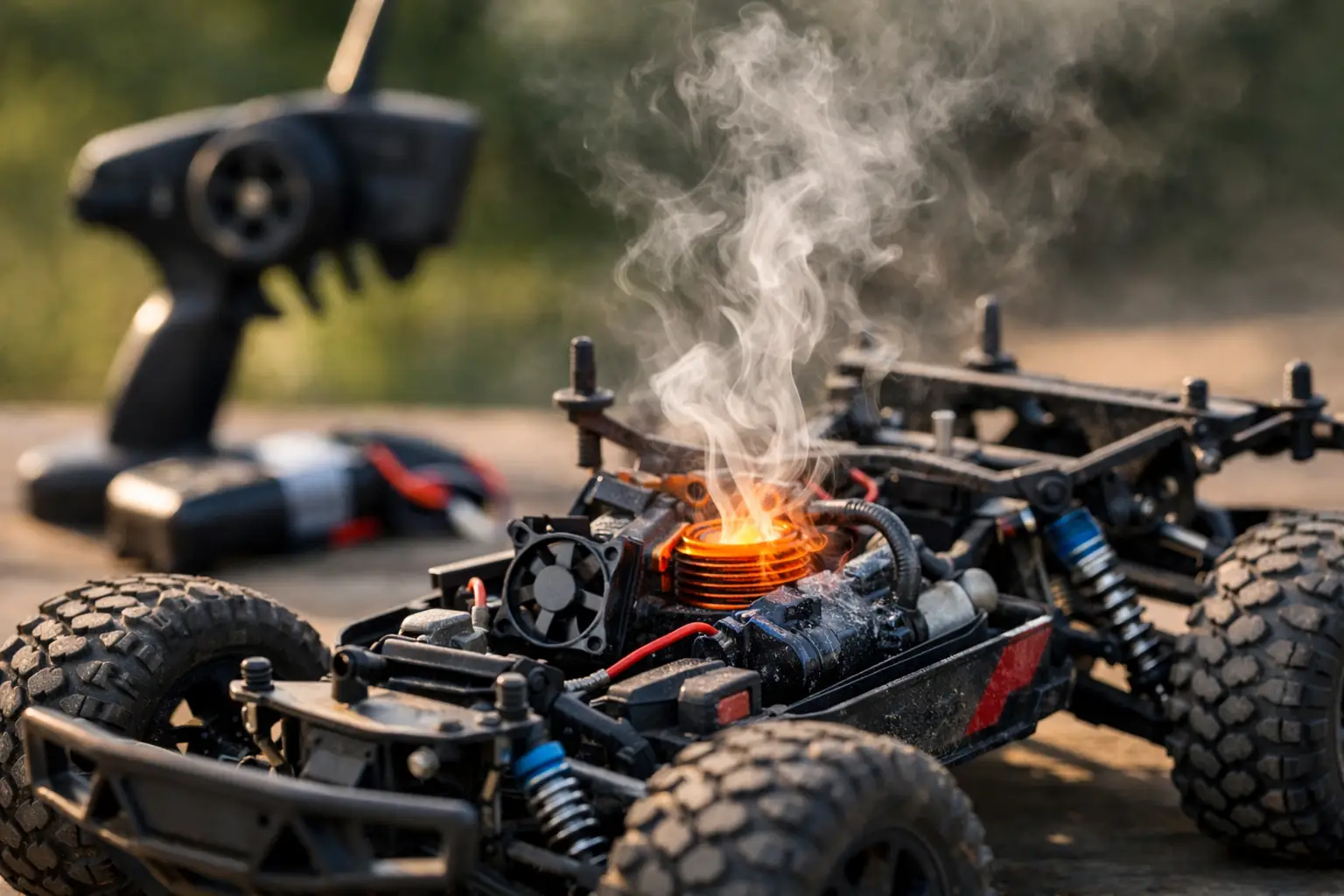
You finish a run, pick up your RC model, and the motor is too hot to touch for more than a second or two. That is usually when the question starts: why is my RC overheating, and is something about to fail?
In most cases, overheating is not caused by a single fault. It is usually a combination of setup choices, driving conditions, gearing, vehicle load or component wear that causes heat to build faster than the model can get rid of it.
The good news is that most RC overheating issues can be diagnosed and fixed. Whether you run an RC basher, crawler, drift car, touring car or speed build, the same basic principles apply.
Shop RC Gears & Bearings
If overheating is being caused by gearing, worn bearings or drivetrain resistance, these categories may help:
-
RC Pinion Gears: https://www.applianceelectronics.co.uk/products/441/pinions
-
RC Spur Gears: https://www.applianceelectronics.co.uk/products/386/accessories-parts?F386=Spur+Gears&openfilter=386
-
RC Bearings & Bearing Kits: https://www.applianceelectronics.co.uk/products/449/bearings
Why Is My RC Overheating During Normal Use?
If your RC model overheats during what feels like ordinary driving, start by thinking about workload.
Heat is generated whenever the motor and ESC are forced to work harder than intended. That extra load can come from:
-
Gearing that is too aggressive
-
Oversized tyres
-
Thick grass or loose terrain
-
Drivetrain resistance
-
High-voltage batteries
-
Poor cooling
-
Electronics that are undersized for the vehicle
A common example is fitting a larger pinion gear to increase top speed. While the speed increase may seem small, the motor now has to work much harder every time the vehicle accelerates or encounters resistance.
The result is increased current draw and significantly higher temperatures.
The Most Common Causes of RC Overheating
Gearing Is Too Aggressive
Incorrect gearing is one of the biggest causes of overheating.
If the pinion gear is too large, or the spur gear too small, the motor must work harder to turn the drivetrain. Although this can improve top speed, it also increases motor load and heat generation.
Signs of gearing-related overheating include:
-
Hot motor after short runs
-
Hot ESC
-
Reduced runtime
-
Thermal shutdowns
Dropping the pinion by just a few teeth can often reduce temperatures dramatically while improving reliability.
Tyres Are Too Large or Too Heavy
Many hobbyists underestimate how much tyres affect temperature.
Larger tyres effectively raise the overall gearing ratio and increase rotating mass.
This means:
-
More strain during acceleration
-
Higher motor load
-
Increased current draw
-
Higher temperatures
If overheating started shortly after changing wheels or tyres, the two are often connected.
Drivetrain Resistance or Binding
Any resistance in the drivetrain creates extra workload for the motor.
Common causes include:
-
Worn bearings
-
Bent driveshafts
-
Tight gear mesh
-
Over-tightened wheel nuts
-
Differential problems
-
Dirt or debris wrapped around axles
A healthy drivetrain should rotate smoothly and freely.
If it feels rough, gritty or unusually tight, investigate before continuing to run the vehicle.
Battery Voltage Is Too High
Moving from:
-
2S to 3S
-
3S to 4S
-
4S to 6S
can dramatically increase performance.
However, higher voltage also increases motor RPM and places greater demands on the entire drivetrain.
Many systems technically support higher cell counts but require gearing adjustments to keep temperatures under control.
Poor Cooling Airflow
Cooling fans and airflow play a bigger role than many people realise.
Common issues include:
-
Failed cooling fans
-
Dirt blocking fan blades
-
Poor wire routing
-
Tight body shells trapping heat
-
Hot summer weather
Cooling improvements help, but they cannot compensate for a severely overloaded setup.
Driving Style and Terrain
Terrain has a major impact on operating temperatures.
Driving in:
-
Long grass
-
Deep gravel
-
Sand
-
Mud
-
Steep hills
places significantly more load on the vehicle than driving on tarmac or compact dirt.
Likewise, repeated full-throttle acceleration and hard braking can generate much more heat than gentle driving.
What Components Usually Overheat?
When people say their RC is overheating, they often focus on the motor.
However, several components should be checked.
Motor
The motor is normally the hottest component because it performs the mechanical work.
ESC
The Electronic Speed Controller can become extremely hot if:
-
Gearing is too high
-
Cooling is poor
-
Current draw is excessive
Battery
Batteries naturally become warm during use.
However, a battery should never become excessively hot.
If a pack is extremely hot after a run, it may indicate:
-
Excessive current draw
-
An unsuitable battery specification
-
Over-discharge
-
Internal battery deterioration
Connectors and Wiring
Hot connectors or wires often indicate resistance problems such as:
-
Poor solder joints
-
Damaged plugs
-
Undersized connectors
How Hot Is Too Hot?
The best tool is an infrared temperature gun.
It allows you to check:
-
Motor temperatures
-
ESC temperatures
-
Battery temperatures
immediately after a run.
Many hobbyists become cautious once motor temperatures approach around 70–80°C, although exact limits vary between manufacturers and motor types.
Consistently exceeding safe temperatures shortens component lifespan even if the model continues to operate.
How to Fix RC Overheating
Gear Down
For many vehicles, this is the single most effective solution.
Reducing pinion size lowers motor load and reduces heat generation.
Check The Drivetrain
Inspect:
-
Bearings
-
Gear mesh
-
Differentials
-
Driveshafts
-
Wheel rotation
A small mechanical issue can create a surprising amount of heat.
Improve Cooling
Check that:
-
Fans are working correctly
-
Airflow is unobstructed
-
Body shells are not trapping excessive heat
Additional heatsinks or upgraded fans can help once the underlying issue has been addressed.
Reassess Electronics
Sometimes the power system itself is the problem.
An underpowered motor in a heavy vehicle or an ESC operating near its limits will often struggle regardless of cooling improvements.
Proper matching of:
-
Motor KV
-
ESC rating
-
Battery voltage
-
Vehicle weight
-
Gear ratio
is essential for reliable operation.
When Upgrades Cause Overheating
Not every upgrade improves reliability.
Modifications that frequently increase temperatures include:
-
Larger tyres
-
Heavier wheels
-
Higher voltage batteries
-
Taller gearing
-
Heavy metal upgrade parts
While these upgrades can improve performance, they often increase the workload placed on the motor and ESC.
Whenever possible, make one major change at a time and monitor temperatures before moving on to the next modification.
When You Should Stop Running Immediately
Stop using the model if you notice:
-
Burning smells
-
ESC thermal shutdowns
-
Extremely hot batteries
-
Sudden power loss
-
Significant performance drop during a run
Continuing to operate an overheated system can damage:
-
Motor magnets
-
ESC components
-
Solder joints
-
Battery cells
-
Internal insulation
Heat damage is often cumulative and may not show up until later.
Why Is My RC Overheating When Nothing Has Changed?
If your setup previously ran cool and now overheats, the problem is often wear-related rather than setup-related.
Possible causes include:
-
Worn bearings
-
Damaged fans
-
Tight differentials
-
Misaligned gear mesh
-
Ageing batteries
-
Motor wear
Seasonal weather can also play a role. A setup that runs comfortably during winter may operate significantly hotter during summer.
Comparing current performance against previous runs often provides valuable clues.
Keep Temperatures Under Control For Better Performance
Most RC overheating issues come back to three core factors: excessive load, drivetrain resistance or poorly matched components.
The key is to work methodically. Check temperatures, inspect the drivetrain, review your gearing and make one change at a time. Guessing usually leads to wasted money, while proper diagnosis often reveals a simple fix.
A cooler-running RC is not just more reliable. It is usually faster, more efficient and more enjoyable to drive over the long term.
If you are unsure whether your gearing is suitable, your bearings are causing resistance, or your electronics are properly matched to your vehicle, getting advice before replacing expensive components is often the cheapest solution.
Frequently Asked Questions
Why is my RC motor getting hot?
The most common causes are aggressive gearing, oversized tyres, drivetrain resistance or heavy terrain that increases motor load.
How hot should an RC motor get?
Many hobbyists aim to keep motor temperatures below around 70–80°C, although exact limits vary between manufacturers and motor types.
Can bigger tyres cause overheating?
Yes. Larger tyres effectively increase gearing and place more load on the motor and ESC.
Will a cooling fan fix overheating?
A cooling fan helps reduce temperatures but will not solve an overloaded setup. The root cause still needs to be addressed.
Can a bad bearing cause overheating?
Absolutely. Worn or seized bearings create resistance, forcing the motor to work harder and generate more heat.
Written by the RC team at RC Model Shop / Appliance Electronics UK Ltd. For RC cars, crawlers, aircraft, boats, batteries, chargers, spares and upgrades, visit RCModelShop.co.uk or call 01922 494608.