

SkyRC Charger Review UK: Which One Fits?
04/05/2026
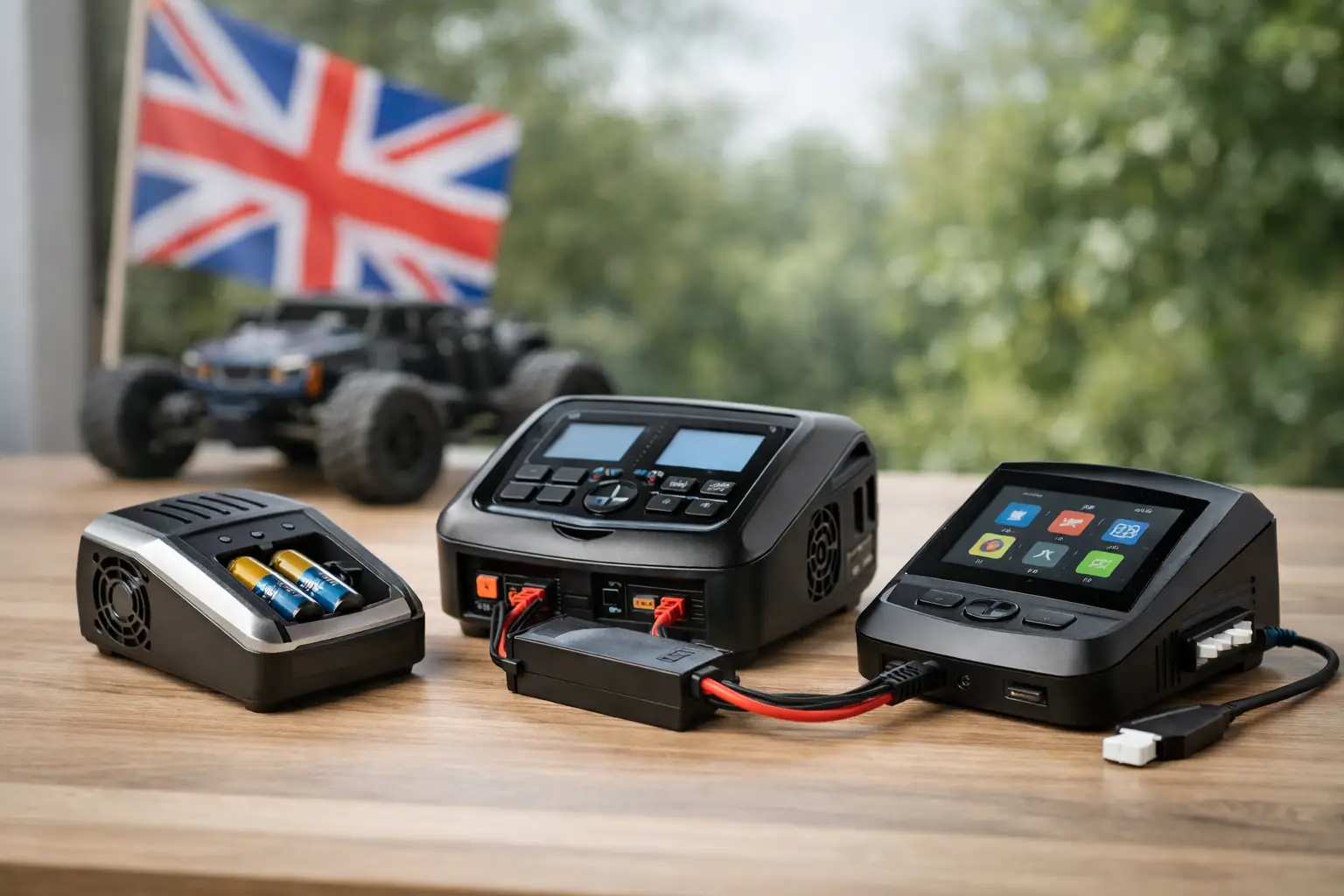
If you have ever bought the wrong charger for an RC pack, you usually find out at the worst possible moment - when a fresh battery is sitting on the bench and the model is ready to run. That is exactly why a proper skyrc charger review uk matters. On paper, many chargers look similar. In practice, the difference between a basic balance charger and a more capable SkyRC unit shows up in charging speed, battery compatibility, menu clarity and how much confidence you have leaving it to do the job properly.
SkyRC has built a strong reputation in the RC market because its chargers cover a wide spread of users. There are compact entry-level options for occasional bashers, dependable mid-range units for regular weekend use, and higher-output chargers for enthusiasts running larger LiPos, multiple packs or mixed battery types. For UK buyers, the appeal is straightforward - known brand, broad model range, sensible pricing, and features that usually match real workshop needs rather than marketing fluff.
SkyRC charger review UK - what makes the brand popular?
The short answer is balance. SkyRC chargers tend to sit in a useful middle ground between budget no-name units and very high-end chargers that only make sense for a small part of the market. You get proper charging modes, balance capability, storage functions and safety settings without paying for a level of complexity many hobbyists do not need.
That matters whether you run a 1/10 buggy, a crawler, a scale lorry or an aircraft setup. Most RC users in the UK want a charger that is easy to set up, can handle common LiPo packs, and does not become obsolete the moment they move from NiMH to LiPo or from 2S to 4S. SkyRC has been consistent in offering that step-up path.
Another reason the brand remains popular is familiarity. Once you have used one SkyRC menu system, the rest of the range tends to feel reasonably intuitive. That is useful if you are upgrading later or buying a second charger for the workshop.
The main strengths of SkyRC chargers
The first strong point is battery support. Many SkyRC models handle LiPo, LiHV, LiFe, NiMH, NiCd and often Pb batteries, which makes them practical if you have older transmitters, receiver packs or non-RC battery jobs alongside your main drive packs. For a lot of buyers, that flexibility is more useful than headline wattage.
The second is charge control. Storage charge and balance charge are not optional extras for modern LiPo ownership. They are basic workshop essentials. SkyRC generally gets this right, with clear programmes that help users maintain packs properly rather than just pushing current into them as fast as possible.
The third is range depth. Some buyers need a compact AC charger they can plug straight into the mains. Others want a DC charger to pair with a bench power supply. Others still want dual-channel charging to handle race day or multiple vehicle setups. SkyRC offers all three routes, which makes the brand easier to recommend across different budgets.
Build quality is also usually reassuring. These are not indestructible workshop tools, but most SkyRC units feel designed for regular hobby use rather than occasional novelty use. Buttons, screens and ports generally hold up well if treated properly.
SkyRC charger review UK - where the trade-offs are
No charger brand is perfect, and SkyRC is no exception. The biggest trade-off is that buyers sometimes choose too little charger for the packs they own. That is not a SkyRC problem so much as a specification problem. A compact charger may be excellent for 2S and 3S packs in modest capacities, but it will feel slow if you move into larger 4S, 5S or 6S batteries.
Some models are also better suited to hobbyists who already understand charge rates, cell counts and battery chemistry. The menus are generally clear, but a first-time buyer can still make the process harder than it needs to be if they jump straight into a more advanced unit without understanding the basics.
There is also the usual AC versus DC question. An all-in-one AC charger is convenient and ideal for many home users. A DC-only charger can often offer better performance for the money, but only if you already have - or are willing to buy - a suitable power supply. In other words, the cheaper unit on the product page is not always the cheaper setup overall.
Which type of SkyRC charger suits which buyer?
If you are new to RC, a single-output AC balance charger is usually the sensible place to start. It keeps setup simple, plugs into a standard mains socket and covers the batteries most beginners actually use. For casual use, that convenience often matters more than absolute charging speed.
If you run several vehicles, share packs across models or go through multiple batteries in one session, stepping up to a higher wattage charger makes a clear difference. Charging at an appropriate rate without waiting half the evening is not just convenient - it means your charging setup keeps up with your hobby.
For more advanced users, dual-channel units are where SkyRC gets especially practical. Being able to charge two packs at once, or run different battery types independently, saves time and bench space. That is particularly useful for racers, aircraft users and anyone managing a few vehicles in one household.
If your setup includes larger packs, look closely at wattage and maximum current rather than just the brand name. Two chargers from the same manufacturer can feel worlds apart in real use if one is better matched to your batteries.
What UK buyers should check before choosing
The first thing to check is your battery list, not the charger headline. Look at your common cell counts, capacities and connector types. If you mostly run 2S hardcase LiPos in 5000mAh capacities, your needs are quite different from someone charging 6S aircraft packs or several small crawler batteries back-to-back.
Second, decide whether you want mains power built in. For many UK households, an AC charger is the easiest answer. It is tidy, portable and straightforward for garage, shed or kitchen-table use. A DC charger makes more sense for dedicated bench setups where a separate power supply is not a hassle.
Third, think about growth. It rarely pays to buy a charger that only just covers what you own today if you are likely to upgrade models soon. Spending a little more now can save replacing the charger six months later.
Finally, pay attention to safety features and ease of use. Clear displays, sensible menus, balance charging support and storage charging are worth having. So are quality leads and reliable connections. Charging should feel controlled, not improvised.
Is SkyRC good value for money?
In most cases, yes. SkyRC chargers are usually not the very cheapest option available, but there is a good reason for that. In RC, the cheapest charger often becomes expensive once it proves slow, limited or unreliable. A charger is one of those workshop items that quietly affects every run you have.
Good value here means buying a unit that suits your batteries properly, offers the charge modes you will actually use and gives you confidence in day-to-day operation. SkyRC tends to perform well on that basis. You are paying for a known platform with proper features and a strong track record in the hobby market.
That said, value depends on use. If you only charge a couple of small packs each month, a basic model may be all you need. If you use RC every weekend, run larger LiPos or need multiple channels, stepping up in the range often makes better financial sense than trying to save a small amount upfront.
Who should buy a SkyRC charger?
SkyRC makes sense for a broad section of the market. Beginners benefit from the clear move away from bundled low-spec chargers. Regular hobbyists benefit from better charging control and wider battery support. Experienced users benefit from more capable output options and multi-pack practicality.
It is also a sensible brand for households with mixed RC use. If one person runs a car, another has a crawler and somebody still has older NiMH packs in service, a SkyRC charger often gives enough flexibility to keep everything covered without turning the charging bench into a mess of different units.
For buyers who want dependable support, competitive pricing and access to the right charger for their setup, specialist retailers such as RC Model Shop also make the decision easier because you can compare realistic options rather than guess from box claims alone.
Final view on this SkyRC charger review UK guide
If you want a charger brand that covers the needs of most RC users without becoming overcomplicated, SkyRC remains an easy one to recommend. The key is not asking whether SkyRC is good in general, but which SkyRC model is right for your batteries, your usage and your plans for the hobby.
Buy for the packs you use most, leave yourself some room to grow, and do not underestimate the value of simple, reliable charging. It is one of the least glamorous purchases in RC, but it is the one that keeps everything else moving.