RC Drifting Tyres Explained Simply
27/04/2026
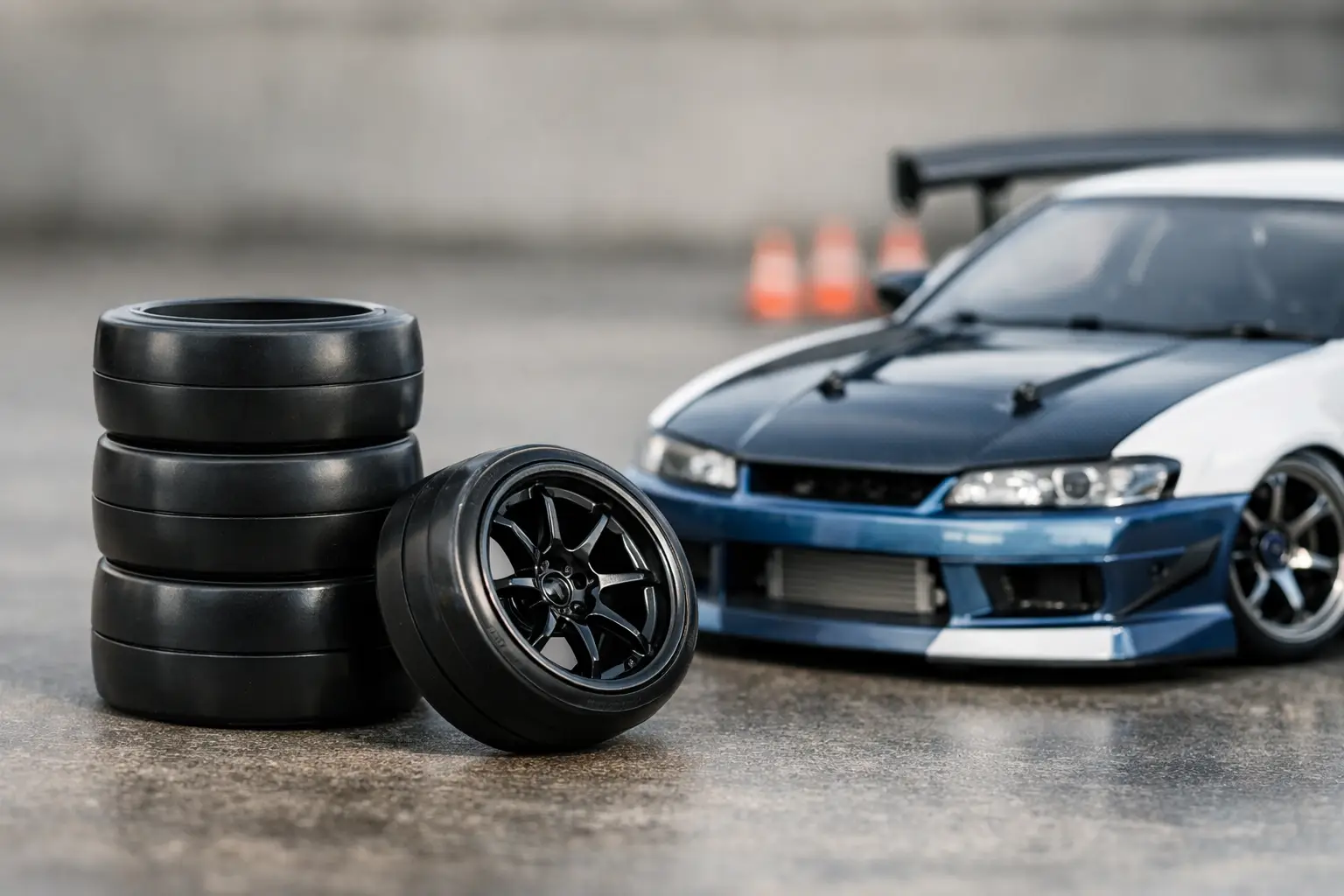
RC Drift Tyres Explained - Choosing the Right Drift Tyres for Your RC Drift Car
If your RC drift car:
-
chatters through corners
-
snaps unpredictably
-
refuses to hold angle
-
feels inconsistent between runs
then tyres are usually the first place to look.
That is why RC drift tyres explained properly matters.
Unlike touring cars, RC drift cars are not trying to maximise grip.
The goal is:
controlled, repeatable slip.
The correct drift tyre changes:
-
steering response
-
transition speed
-
drift angle stability
-
consistency
-
overall driving feel
more than many beginners expect.
A drift setup that feels unpredictable on the wrong tyres can suddenly feel smooth and controllable once the surface and compound match properly.
RC Model Shop stocks a large range of RC drift tyres and mounted wheel sets suitable for indoor and outdoor RC drifting setups.
What makes RC drift tyres different?
The biggest difference between drift tyres and normal RC on-road tyres is:
grip level.
Traditional touring tyres aim for:
-
traction
-
corner speed
-
braking grip
Drift tyres are designed to:
-
break traction predictably
-
slide consistently
-
maintain angle smoothly
That changes everything about how the chassis behaves.
For many modern 1/10 RC drift cars, especially indoors, this means using:
-
hard plastic-style compounds
-
dedicated drift compounds
-
lower-grip tyre materials
rather than soft rubber racing tyres.
For beginners this often feels backwards initially because:
-
softer tyres usually mean more grip
-
more grip sounds easier
In drifting though, excessive grip can actually make the chassis:
-
harder to balance
-
twitchier on transitions
-
less predictable mid-corner
A consistent controlled slide is usually far easier to drive than sudden grip and snap rotation.
Hard plastic vs rubber RC drift tyres
Most RC drift tyres fall into two broad categories:
-
hard drift compounds
-
rubber/hybrid compounds
Hard plastic drift tyres
Hard drift tyres dominate many indoor RC drift setups because they:
-
slide consistently
-
wear slowly
-
suit polished surfaces well
-
maintain predictable handling
These tyres work especially well on:
-
polished concrete
-
P-tile
-
painted floors
-
dedicated drift tracks
Their biggest advantage is consistency.
Once the surface and setup match properly, hard tyres usually:
-
repeat the same slide behaviour
-
maintain angle consistently
-
feel easier to tune around
That predictability is what most experienced drift drivers actually want.
Rubber drift tyres
Rubber drift tyres still have their place, especially:
-
outdoors
-
on rough asphalt
-
on lower-grip surfaces
They usually provide:
-
slightly more grip
-
calmer low-speed behaviour
-
improved rough-surface control
The downside is:
-
increased wear
-
changing grip levels
-
reduced consistency as temperatures change
For tighter indoor drifting, many hobbyists eventually move toward dedicated hard compounds.
Surface matters more than the tyre brand
This is one of the most important RC drifting lessons:
choose tyres for the surface first.
A drift tyre that feels excellent on polished concrete may feel terrible on:
-
rough tarmac
-
dusty garage floors
-
carpet tiles
-
outdoor asphalt
That is why experienced drift drivers often keep:
-
multiple compounds
-
spare wheel sets
-
different mounted tyre combinations
ready for different venues.
The fastest way to improve a drift chassis is often:
-
changing tyres
not: -
replacing electronics
-
changing suspension
-
buying more power
Indoor vs outdoor RC drift tyres
Indoor drift setups
Indoor drift surfaces usually favour:
-
hard compounds
-
smoother transitions
-
lower overall grip
Indoor drifting also tends to reward:
-
consistency
-
smooth setup balance
-
repeatable steering feel
This is where dedicated drift tyres really shine.
Outdoor drift setups
Outdoor surfaces are rougher and less predictable.
This often means:
-
slightly softer compounds
-
more forgiving tyres
-
better shock absorption
-
additional steering stability
Outdoor drifting also creates:
-
faster tyre wear
-
more surface contamination
-
larger grip variations
That is completely normal.
Front and rear drift tyres are not always identical
Beginners often assume all four drift tyres should always match.
Sometimes they should.
Sometimes they should not.
Many hobbyists start with:
-
matched front/rear compounds
because it creates a predictable baseline.
Later, experienced drivers may experiment with:
-
grippier front tyres
-
altered front profiles
-
different sidewall feel
to adjust:
-
steering response
-
front-end bite
-
transition speed
-
mid-corner stability
Too much front grip can make a drift chassis:
-
nervous
-
twitchy
-
difficult to settle
Rear tyres usually control:
-
traction breakaway
-
drift stability
-
overall slide balance
while the front tyres fine-tune steering feel.
Drift tyre size and fitment matter
Before worrying about compounds, check:
-
wheel diameter
-
tyre width
-
wheel offset
-
overall fitment
Most RC drift cars use:
1/10 scale wheels
but fitment still varies between:
-
chassis types
-
wheel brands
-
offset setups
Poor tyre fitment causes:
-
inconsistent steering
-
vibration
-
uneven wear
-
unstable transitions
Wheel offset also affects:
-
steering geometry
-
scrub radius
-
body clearance
-
overall stance
A tyre that technically fits may still create handling problems if the wheel setup is wrong.
Why drift tyres sometimes feel better after a few runs
Brand-new drift tyres do not always feel perfect immediately.
Some compounds improve slightly after:
-
surface scuffing
-
heat cycling
-
light wear-in
This is normal.
However, uneven wear usually points toward:
-
alignment issues
-
inconsistent ride height
-
poor wheel fitment
-
steering setup problems
Hard drift compounds usually wear slowly, but tyre shape still matters.
A tyre that wears unevenly can dramatically change:
-
transition speed
-
steering consistency
-
drift angle stability
over time.
How tyres affect RC drift setup
Tyres are not a final add-on.
They are a core setup component.
Changing tyre compound can alter:
-
steering feel
-
gyro response
-
transition behaviour
-
rear stability
-
suspension balance
Examples:
-
lower-grip tyres may calm aggressive steering
-
higher-grip fronts may require gyro changes
-
different compounds may affect chassis rotation
This is why experienced drift drivers usually:
-
change one thing at a time
-
test carefully
-
tune around the tyre first
rather than constantly changing multiple setup areas simultaneously.
Common RC drift tyre mistakes
The biggest mistake is buying based purely on:
-
brand popularity
-
appearance
-
“hardest available” compounds
Harder is not automatically better.
The correct tyre depends on:
-
surface type
-
temperature
-
chassis balance
-
driving style
Other common mistakes include:
-
ignoring wheel fitment
-
mixing incompatible compounds randomly
-
poor wheel mounting
-
chasing excessive grip changes immediately
For most hobbyists:
predictable handling beats dramatic handling.
Consistency is what actually improves driving.
A smarter way to choose RC drift tyres
If you are starting out:
-
Buy for your normal surface
-
Use a matched set first
-
Avoid extreme compounds initially
-
Learn the chassis before chasing setup tricks
That gives you a stable baseline and removes much of the guesswork.
If you drift at a club, check what:
-
compounds
-
wheel sizes
-
tyre styles
local drivers already use.
That is not copying blindly.
It is using proven surface knowledge.
At RC Model Shop, the goal is always helping RC drift owners match tyres properly to:
-
the surface
-
the wheel setup
-
the chassis
-
the driving style
rather than simply recommending the hardest compound available.
A good drift tyre does not just make the RC car slide.
It makes the whole chassis feel:
-
smoother
-
more predictable
-
easier to control
-
more enjoyable to drive
every lap.
Frequently Asked Questions
What tyres are best for RC drifting?
For many indoor RC drift setups, hard plastic drift tyres provide the best consistency and control.
Are rubber tyres good for RC drifting?
Rubber tyres can work well outdoors or on rougher surfaces, but many indoor drift setups prefer dedicated hard compounds.
Why does my RC drift car chatter through corners?
Common causes include:
-
incorrect tyre compound
-
poor surface match
-
uneven tyre wear
-
incorrect setup balance
Should front and rear drift tyres match?
Beginners usually benefit from matched sets, while experienced drivers may experiment with different front compounds for tuning purposes.
Why do drift tyres wear unevenly?
Uneven wear often points toward:
-
setup alignment issues
-
wheel fitment problems
-
ride height imbalance
-
inconsistent steering geometry
Written by the RC team at RCModelShop.co.uk / Appliance Electronics UK Ltd, UK supplier of RC drift tyres, mounted wheel sets and RC drift accessories.