RC Connector Types Guide for RC Models
03/05/2026
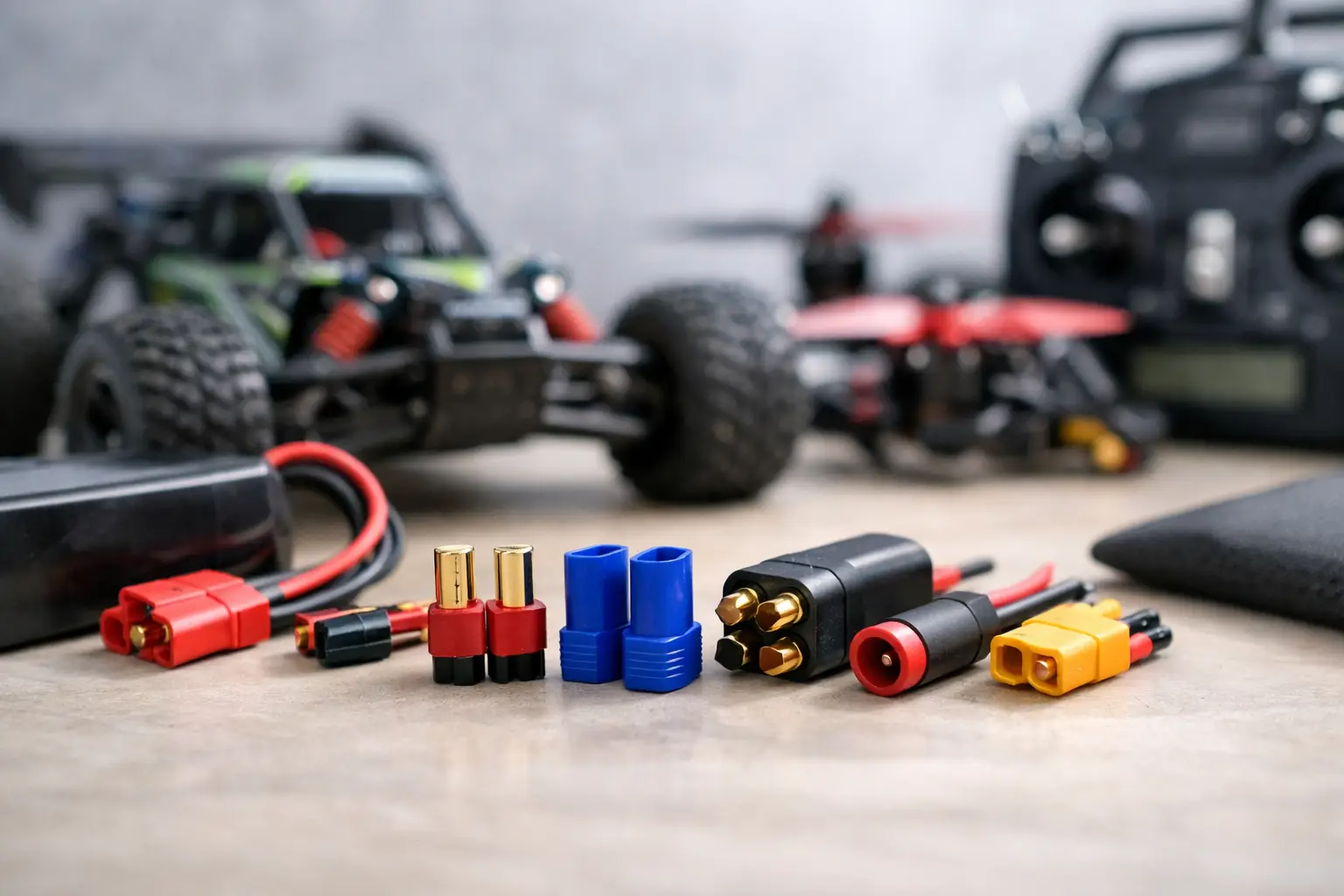
RC Connector Types Guide - XT60, XT90, Deans, EC5, IC5 and Traxxas Connectors Explained
A battery that will not plug into your ESC is one of the fastest ways to stall a new RC build.
It happens constantly:
-
the battery spec looks correct
-
the voltage is right
-
the size fits the tray
…but the connector is wrong.
This RC connector types guide is designed to make that part simpler, whether you are:
-
buying your first LiPo battery
-
upgrading a brushless setup
-
standardising multiple RC vehicles
-
matching ESCs and chargers properly
The correct RC connector affects:
-
compatibility
-
current handling
-
charging convenience
-
resistance
-
long-term reliability
Get it wrong and you can end up with:
-
excessive heat
-
voltage drop
-
messy adapters
-
unreliable connections
Get it right and battery swapping becomes quick, simple and dependable.
Why RC connector choice matters
The connector is not just a plug at the end of a wire.
It directly affects:
-
power delivery
-
heat generation
-
battery compatibility
-
charger compatibility
-
workshop convenience
A connector that is too small for the system may:
-
overheat
-
create resistance
-
reduce efficiency
-
wear prematurely
A connector that is unnecessarily large may:
-
waste space
-
complicate routing
-
feel awkward in smaller chassis
For many RC hobbyists, the smartest long-term approach is standardising connector types across most vehicles.
That makes:
-
charging easier
-
battery swapping cleaner
-
spare management simpler
-
adapters less necessary
RC Model Shop stocks a large range of RC connectors, adapters and charging leads suitable for bashers, crawlers and high-performance RC setups.
XT60 connectors
XT60 remains one of the most common modern RC connector types.
It is popular because it offers:
-
good current handling
-
compact size
-
reliable fitment
-
straightforward soldering
-
wide compatibility
For many:
-
1/10 RC cars
-
crawlers
-
drift cars
-
lighter 1/8 vehicles
XT60 is often the safest all-round recommendation.
XT60 connectors are especially useful for hobbyists starting fresh because:
-
batteries are widely available
-
chargers commonly support them
-
adapters are easy to source
You can browse compatible XT60 RC connectors and adapters here.
XT90 connectors
XT90 is effectively the larger high-current version of XT60.
It is designed for:
-
larger RC vehicles
-
high-current brushless systems
-
1/8 bashers
-
aircraft
-
larger battery setups
Compared to XT60, XT90 offers:
-
greater current capacity
-
larger contact area
-
improved headroom for demanding systems
The trade-off is physical size.
XT90 connectors are noticeably bulkier, which can matter in:
-
compact battery trays
-
low-profile chassis
-
tight cable routing areas
For many large-scale RC vehicles though, the extra capacity is worthwhile.
You can browse compatible XT90 RC connectors and leads here.
Deans / T-plug connectors
Deans connectors, often called T-plugs, have been part of RC for years and still remain common on many older and mid-range setups.
They are:
-
compact
-
lightweight
-
capable of decent current handling
especially on:
-
1/10 bashers
-
touring cars
-
aircraft setups
Experienced hobbyists often continue using Deans because:
-
existing batteries already use them
-
older ESCs are compatible
-
the connector remains proven and familiar
However, some users find Deans:
-
tighter to disconnect
-
slightly harder for beginners
-
less convenient than newer XT-style designs
You can browse compatible Deans connectors and adapters here.
EC3 and EC5 connectors
EC connectors remain very popular across many branded RC systems.
EC3 connectors
EC3 connectors are commonly used on:
-
moderate power setups
-
1/10 vehicles
-
lighter brushless systems
They provide:
-
reliable contact
-
decent current handling
-
strong physical retention
You can browse compatible EC3 connectors and leads here.
EC5 connectors
EC5 is the larger high-current version designed for:
-
1/8 RC cars
-
larger brushless systems
-
higher-capacity batteries
The larger connector size improves current handling under heavier loads.
You can browse compatible EC5 connectors and adapters here.
IC3 and IC5 connectors
IC connectors are commonly associated with Spektrum Smart systems.
They build on EC-style connector designs while adding:
-
smart charging compatibility
-
cleaner integration with compatible electronics
-
improved telemetry support on supported systems
IC3 connectors
IC3 connectors are generally suited to:
-
moderate power systems
-
1/10 vehicles
-
smaller brushless setups
You can browse compatible IC3 connectors and charging leads here.
IC5 connectors
IC5 connectors are designed for:
-
higher current setups
-
1/8 vehicles
-
larger LiPo batteries
-
demanding brushless systems
You can browse compatible IC5 RC connectors and adapters here.
For buyers already running Spektrum electronics, staying within the IC ecosystem can simplify:
-
charging
-
telemetry
-
battery compatibility
considerably.
Traxxas connectors
Traxxas high-current connectors are widely used across Traxxas vehicles and batteries.
For owners already invested in:
-
Traxxas ESCs
-
Traxxas batteries
-
Traxxas chargers
keeping everything standardised within that ecosystem often makes sense.
The main advantage is convenience.
The downside is that hobbyists running mixed brands sometimes eventually move toward:
-
XT60
-
XT90
-
EC5
or other more universal connector systems for easier battery sharing.
You can browse compatible Traxxas connectors and adapters here.
Balance leads are different from main battery connectors
This confuses many beginners initially.
The:
-
XT60
-
XT90
-
Deans
-
EC5
-
IC5
connector powers the RC vehicle.
The white balance lead on LiPo batteries is separate and used during charging so the charger can:
-
monitor individual cells
-
balance voltages correctly
-
improve battery safety
The balance connector does NOT power the RC vehicle.
Understanding this early avoids a lot of confusion when setting up LiPo charging.
Should you use RC connector adapters?
Adapters are useful for:
-
temporary compatibility
-
testing setups
-
charging flexibility
but they are rarely the cleanest long-term solution.
Every additional connection introduces:
-
extra resistance
-
more heat potential
-
another possible failure point
In low-power systems this may not matter much.
In high-current brushless setups, it matters far more.
If the same battery and ESC combination will be used regularly, converting one side to the correct connector is usually the better long-term approach.
Soldering quality matters more than connector branding
A premium connector installed badly is still a bad connection.
Poor soldering causes:
-
resistance
-
heat
-
voltage drop
-
intermittent faults
Common problems include:
-
cold solder joints
-
exposed wire
-
poor heat shrink coverage
-
incorrect wire gauge
Good-quality connectors fitted properly are usually more important than endlessly debating connector brands online.
A sensible way to standardise your RC setup
For many RC owners, the easiest long-term approach is:
-
one connector type for smaller setups
-
one larger connector for high-current vehicles
For example:
-
XT60 for most 1/10 vehicles
-
XT90 or EC5 for larger 1/8 systems
That keeps:
-
batteries interchangeable
-
chargers simpler
-
workshop organisation cleaner
without creating a drawer full of unnecessary adapters.
Which RC connector type is best overall?
There is no perfect universal connector.
The best RC connector is the one that:
-
suits the current demand
-
fits the chassis properly
-
remains easy to use
-
matches the rest of your setup
For many hobbyists:
-
XT60 remains the best all-round modern choice
-
XT90 suits larger high-current setups
-
Deans still works well for many older systems
-
EC and IC connectors remain excellent within their ecosystems
-
Traxxas connectors make sense for dedicated Traxxas owners
At RC Model Shop, the goal is always helping hobbyists match connectors properly to:
-
the battery
-
the ESC
-
the charger
-
the vehicle
-
the intended use
rather than simply recommending the largest connector available.
A clean, reliable power setup makes every part of RC ownership easier.
Frequently Asked Questions
What is the best RC battery connector?
For many modern RC setups, XT60 is one of the best all-round choices because it balances:
-
size
-
current handling
-
reliability
-
availability
very well.
Are XT90 connectors better than XT60?
XT90 connectors handle higher current and suit larger RC vehicles, but they are physically larger and unnecessary for many 1/10 setups.
Can I use adapters between RC connectors?
Yes, but adapters add:
-
resistance
-
extra connections
-
additional failure points
and are usually best treated as temporary solutions.
Are EC5 and IC5 connectors the same?
They are similar in size and purpose, but IC5 connectors include additional Smart system compatibility features.
Why does my RC battery have two connectors?
The main connector powers the RC vehicle. The smaller balance connector is used during LiPo charging to monitor individual cell voltages.
Written by the RC team at RCModelShop.co.uk / Appliance Electronics UK Ltd, UK supplier of RC connectors, charging leads, LiPo batteries and brushless electronics.