RC Battery Charging Guide for Safe, Fast Use
11/05/2026
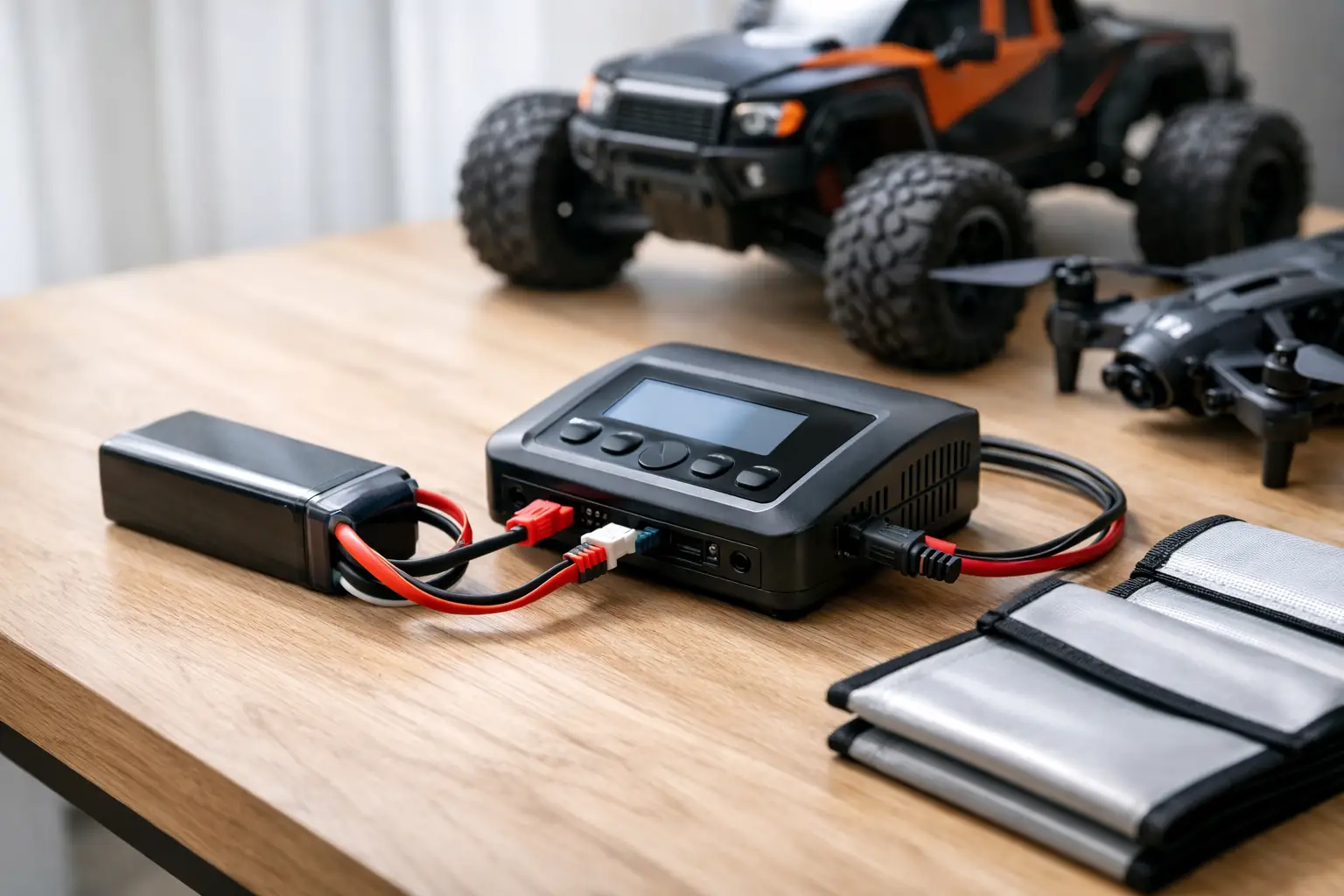
RC Battery Charging Guide - How to Charge RC Batteries Safely and Properly
A swollen LiPo, a flat NiMH pack before the second run, or a charger set to the wrong cell count can quickly turn a good RC session into an expensive problem.
This RC battery charging guide is designed to keep things simple:
-
charge batteries correctly
-
improve battery lifespan
-
reduce charging mistakes
-
maintain consistent performance
-
avoid unnecessary damage
Whether you run an RC car, crawler, buggy, boat or aircraft, good charging habits make a noticeable difference over time.
Why proper RC battery charging matters
Batteries are one of the easiest RC components to get wrong because small details matter.
Things like:
-
battery chemistry
-
charge rate
-
cell count
-
connector type
-
storage voltage
all affect:
-
safety
-
runtime
-
long-term battery health
Get those basics right and you will usually see:
-
steadier power delivery
-
longer runtimes
-
improved reliability
-
fewer packs needing replacement early
For beginners, the goal is avoiding obvious charging mistakes.
For experienced hobbyists, it becomes more about matching the charger setup properly to:
-
the battery
-
the vehicle
-
the terrain
-
the way the RC model is actually used
RC Model Shop stocks a wide range of RC batteries and LiPo packs suitable for crawlers, bashers, boats and high-performance RC cars.
Know your RC battery type before charging
The first step is always identifying the battery chemistry correctly.
Most RC users will be charging:
-
LiPo
-
LiHV
-
NiMH
-
LiFe batteries
Each battery type requires:
-
the correct charging mode
-
suitable voltage settings
-
proper charge rates
Using the wrong charger mode is where many charging problems begin.
LiPo batteries
LiPo batteries are the most common modern RC battery option because they offer:
-
strong power output
-
low weight
-
excellent discharge performance
However, they also require:
-
careful charging
-
balance charging
-
correct storage voltage
-
sensible handling
NiMH batteries
NiMH batteries are generally more forgiving and remain popular in:
-
entry-level RC models
-
beginner vehicles
-
younger users' setups
They still require the correct charger mode and suitable charge current.
LiHV batteries
LiHV packs are similar to LiPo batteries but charge to a higher voltage. Chargers must specifically support LiHV charging mode before use.
LiFe batteries
LiFe batteries are less common in mainstream RC vehicles but are appreciated by some users for their stability and lifespan.
The important point is simple:
never guess the battery chemistry.
Always check the label before charging.
Choosing the right RC charger
A basic wall charger may work for a starter vehicle, but it offers limited control and very little information about battery health.
A proper balance charger is usually the smarter long-term investment because it provides:
-
cell monitoring
-
voltage information
-
adjustable charge rates
-
balance charging
-
storage charging
-
discharge functions
If you own multiple RC models, a charger supporting several battery chemistries makes life much easier.
For LiPo users, the minimum sensible features are:
-
balance charging
-
storage mode
-
discharge mode
-
clear cell detection
-
reliable voltage monitoring
Connector compatibility matters too.
RC Model Shop stocks a range of RC connectors, adapters and charging leads suitable for many popular RC battery setups.
RC battery charge rates explained simply
For most batteries, the safest starting point is:
1C charging.
In practical terms:
-
a 5000mAh battery charges at 5.0A
-
a 2200mAh battery charges at 2.2A
Many modern batteries claim faster charge capability, but maximum charge rates are not always the best option for long-term battery health.
Charging faster:
-
increases heat
-
creates additional stress
-
may shorten battery lifespan over time
For most RC users, 1C remains the safest and most dependable balance between:
-
speed
-
safety
-
battery longevity
Cell count matters
Always confirm the correct cell count before starting a charge.
Examples:
-
2S LiPo = 2-cell lithium setup
-
3S LiPo = 3-cell lithium setup
-
4S LiPo = 4-cell lithium setup
If the charger asks you to confirm detected cells:
stop and check properly.
Those extra few seconds can prevent:
-
damaged batteries
-
charger failures
-
dangerous charging conditions
Why balance charging matters for LiPo batteries
If your LiPo battery has:
-
a main power lead
-
a balance lead
then balance charging should normally be your standard charging method.
Balance charging allows the charger to monitor each cell individually and keep voltages evenly matched across the pack.
That matters because LiPo cells naturally drift apart over time.
If one cell becomes:
-
significantly higher
-
significantly lower
-
unstable
then the battery becomes less healthy and potentially unsafe.
Balance charging may take slightly longer, but the additional safety and battery care are well worth it.
Safe RC battery charging setup
Charging location matters more than many RC owners realise.
Always charge batteries:
-
on a non-flammable surface
-
in a ventilated area
-
away from clutter
-
with supervision
A LiPo charging bag or metal charging box adds another layer of protection but does not replace sensible charging habits.
Never leave RC batteries charging unattended.
Also avoid charging:
-
hot batteries straight after use
-
extremely cold batteries straight from storage
Allow packs to return closer to room temperature first.
Cable condition matters too.
Damaged:
-
balance leads
-
connectors
-
insulation
-
charging wires
can create:
-
resistance
-
heat
-
unreliable charging
-
intermittent faults
Storage charging and battery lifespan
One of the most common LiPo mistakes is storing packs:
-
fully charged
-
completely flat
If a battery will not be used for a while, storage charge it properly.
Storage voltage helps:
-
reduce cell stress
-
improve lifespan
-
maintain pack stability
This matters especially for RC owners with multiple packs who may only use some batteries each weekend.
Heat also shortens battery life dramatically.
Avoid storing batteries:
-
inside hot cars
-
near radiators
-
in direct sunlight
Common RC battery charging mistakes
Most charging problems come from rushing.
Common mistakes include:
-
wrong chemistry mode
-
incorrect cell count
-
charging too fast
-
damaged charging leads
-
ignoring battery swelling
-
poor storage habits
Another common issue is assuming batteries with the same connector are automatically compatible.
Connector type alone does not confirm:
-
voltage
-
capacity
-
discharge rating
-
physical fitment
Battery condition matters too.
If a pack:
-
swells
-
overheats
-
develops severe cell imbalance
-
struggles to balance charge
then replacement is often the safer option.
Matching charging setup to your RC use
Different RC owners require different charging routines.
A casual weekend basher may only need:
-
basic 1C charging
-
storage charging
-
simple charger setup
A crawler owner may prioritise:
-
battery lifespan
-
smooth voltage delivery
-
lower stress charging
Someone running multiple:
-
4S
-
6S
-
high-power brushless setups
will care much more about:
-
charger wattage
-
parallel charging
-
connector compatibility
-
efficient bench setup
That is why there is no single perfect RC charging setup for everyone.
The best charging routine is the one that:
-
remains safe
-
stays consistent
-
suits your RC models properly
-
becomes reliable habit
When should you replace an RC battery?
Even well-maintained batteries wear out eventually.
Over time you may notice:
-
reduced runtime
-
voltage sag
-
poor balance behaviour
-
swelling
-
weaker performance under load
That is normal RC ownership.
The goal is not making a battery last forever.
The goal is getting dependable performance while the battery remains safe and worthwhile to use.
If you are unsure which:
-
charger
-
connector
-
battery chemistry
-
charging setup
suits your RC vehicle, getting proper advice before buying usually saves money long-term.
At RC Model Shop, the focus is always on matching the battery and charger properly to:
-
the vehicle
-
the electronics
-
the intended use
-
the driver's experience level
rather than simply recommending the most expensive option available.
A good charging routine is not complicated once it becomes habit.
Check the battery, confirm the settings, charge at a sensible rate and store the pack properly afterwards.
Do that consistently and your batteries will usually reward you with:
-
safer charging
-
better runtime
-
improved reliability
-
fewer unpleasant surprises before the next run.
Frequently Asked Questions
What is the safest RC battery charge rate?
For most RC batteries, 1C charging is considered the safest and best long-term option.
Should I always balance charge LiPo batteries?
Yes. Balance charging helps keep LiPo cells evenly matched and improves both safety and lifespan.
Can I leave RC batteries charging unattended?
No. RC batteries should always be supervised while charging.
What happens if I charge the wrong cell count?
Incorrect cell count settings can damage the battery and potentially create dangerous charging conditions.
When should I replace a LiPo battery?
LiPo batteries should be replaced if they:
-
swell
-
overheat excessively
-
develop major cell imbalance
-
show significant performance loss
Written by the RC team at RCModelShop.co.uk / Appliance Electronics UK Ltd, UK supplier of RC batteries, LiPo chargers, connectors and charging accessories.