

How to Repair RC Car Problems Fast
26/04/2026
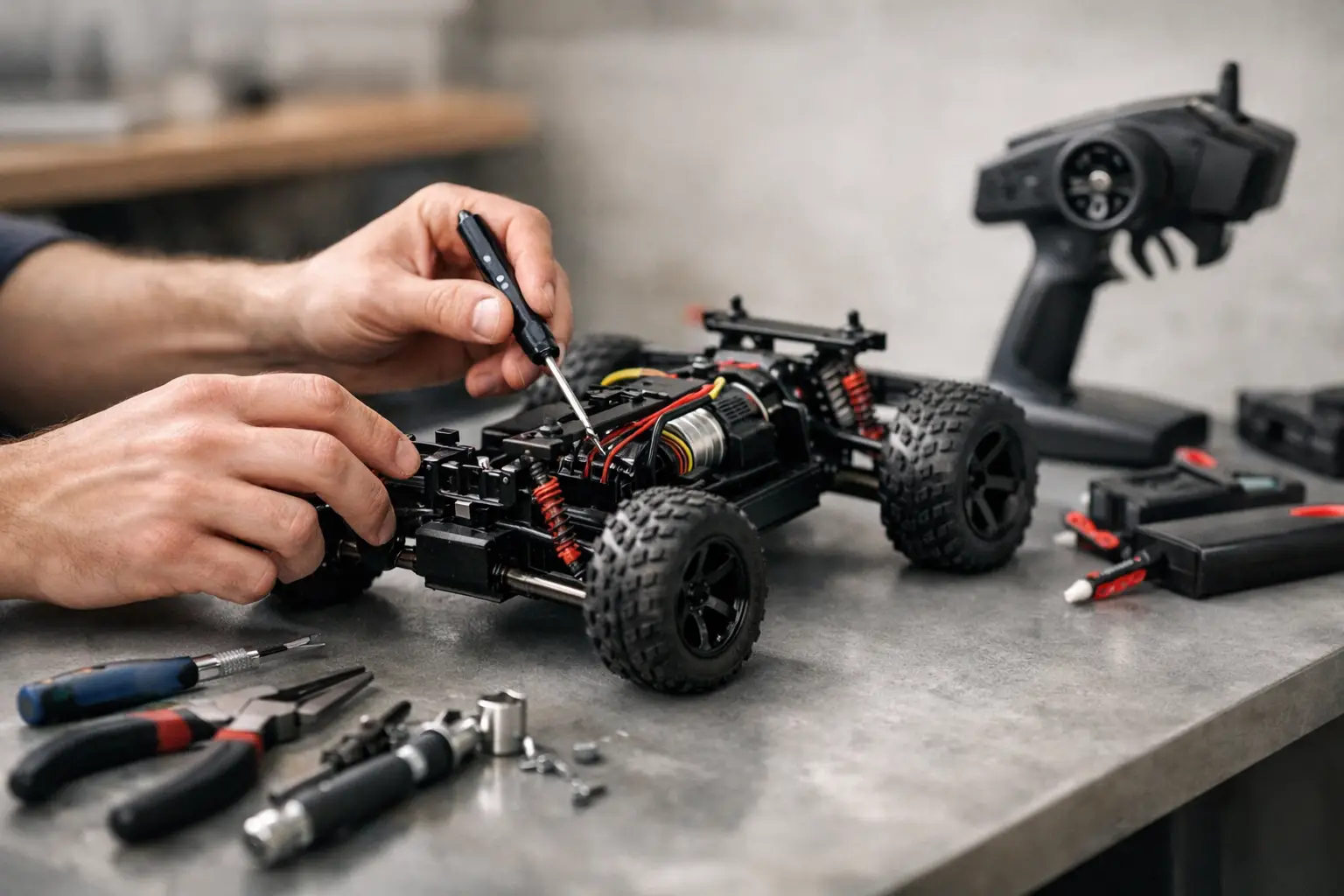
How to Repair RC Car Problems Without Wasting Money on Random Parts
When an RC car:
-
stops steering properly
-
loses drive
-
cuts out mid-run
-
makes grinding noises
-
suddenly feels weak
the fault is usually much smaller than it first appears.
That is why learning how to repair RC car problems properly matters.
Many RC failures that look serious actually come down to:
-
loose pinions
-
stripped spur gears
-
worn bearings
-
disconnected plugs
-
steering link damage
-
battery connection issues
The key is diagnosing the problem properly before replacing parts.
A methodical check usually saves:
-
money
-
downtime
-
unnecessary upgrades
-
random parts swapping
RC Model Shop stocks a large range of RC electronics, ESCs, motors and radio equipment suitable for beginners and advanced RC builds alike.
Start with the simplest checks first
Before dismantling anything, ask:
what exactly changed?
A completely dead RC car points toward:
-
battery issues
-
connectors
-
ESC problems
-
power delivery
A car with:
-
steering but no throttle
usually points somewhere else entirely.
Likewise:
-
grinding noises
-
wheel spin without movement
-
clicking under load
usually suggest drivetrain problems rather than electronics failure.
The best repair process starts simple:
-
Check battery condition
-
Check radio batteries
-
Inspect visible wiring
-
Test steering separately
-
Test throttle separately
-
Listen carefully for noises
Many RC faults become obvious very quickly once systems are isolated properly.
Battery and power issues are extremely common
A surprising number of “dead” RC cars actually have:
-
loose battery connectors
-
damaged plugs
-
worn switches
-
weak transmitter batteries
before anything major has failed.
Check for:
-
heat marks on connectors
-
melted plugs
-
loose wiring
-
intermittent power cuts
-
damaged solder joints
On heavily used RC cars, battery plugs can loosen over time and create:
-
voltage drops
-
cut-outs
-
inconsistent throttle response
If the RC car powers on but behaves strangely, ESC recalibration is also worth trying before replacing electronics.
Many hobbyists assume:
“the ESC is dead”
when:
-
throttle endpoints
-
neutral calibration
-
radio settings
have simply drifted after setup changes.
Steering works but throttle does not?
That usually narrows the fault considerably.
Possible causes include:
-
stripped spur gear
-
loose pinion gear
-
damaged driveshaft
-
ESC calibration issue
-
motor wiring fault
Pick the car up carefully and apply gentle throttle.
Smooth spinning noise but no movement
Usually:
-
stripped gears
-
loose grub screws
-
disconnected drivetrain parts
Juddering or stuttering
Possible causes:
-
binding drivetrain
-
damaged bearings
-
ESC problems
-
poor motor connections
Clicking noises
Often:
-
incorrect gear mesh
-
damaged spur gears
-
worn drivetrain components
Drivetrain problems are often visible
Many drivetrain faults can be diagnosed quickly once the gear cover comes off.
Inspect:
-
spur gear teeth
-
pinion condition
-
gear mesh
-
driveshafts
-
diff outdrives
A mesh that is:
-
too tight
creates: -
heat
-
drag
-
noisy running
A mesh that is:
-
too loose
creates: -
clicking
-
stripped spur gears
-
drivetrain wear
RC Model Shop stocks a large range of RC pinions, spur gears and drivetrain components suitable for many popular RC platforms.
Bearings matter more than beginners realise
Worn bearings create huge hidden problems.
Bad bearings can cause:
-
overheating
-
weak acceleration
-
drivetrain drag
-
poor runtime
-
ESC strain
Spin each wheel by hand.
If:
-
one wheel feels rough
-
one corner binds
-
one axle feels gritty
then inspect:
-
hub bearings
-
axle hardware
-
drivetrain alignment
A seized £3 bearing can easily make an expensive brushless setup feel broken.
Steering repairs are often mechanical, not electronic
Many steering problems come from:
-
loose servo horns
-
worn steering links
-
stripped servo savers
-
bent turnbuckles
rather than failed servos.
A servo may still operate perfectly while:
-
the horn slips
-
linkage flexes
-
steering geometry binds
If the wheels:
-
pull to one side
-
fail to centre
-
wobble inconsistently
inspect:
-
steering links
-
servo saver tension
-
steering rack
-
hub carriers
before replacing electronics.
You can browse a large range of:
through RC Model Shop.
Suspension damage is easier to miss than people think
Off-road RC cars regularly suffer:
-
cracked suspension arms
-
bent hinge pins
-
leaking shocks
-
popped turnbuckles
without obvious catastrophic failure.
The chassis may still drive, but handling suddenly feels:
-
unstable
-
uneven
-
inconsistent
Compare:
-
left vs right suspension
-
front vs rear ride height
-
shock compression
to spot subtle damage.
Cleaning the chassis first helps massively because dirt often hides:
-
cracks
-
oil leaks
-
bent hardware
Brushless motor and ESC problems
Brushless systems are reliable, but poor setup creates problems quickly.
If the RC car:
-
stutters off the line
-
cuts out when hot
-
coggs under throttle
-
loses power after a few minutes
start with:
-
motor bullets
-
solder joints
-
ESC fan operation
-
gearing
-
drivetrain drag
Heat causes many brushless problems.
An overheating ESC does not always mean:
“the ESC is faulty.”
It may simply mean:
-
gearing is too aggressive
-
bearings are binding
-
tyres are oversized
-
airflow is poor
Brushed motor faults behave differently
Brushed systems usually show:
-
weak power
-
hot motor smell
-
inconsistent throttle
-
sparking
-
fading runtime
once brushes or commutators wear out.
On lower-cost brushed systems, replacement is often more sensible than deep motor rebuilding.
Why compatibility matters during repairs
One of the biggest RC repair mistakes is buying:
-
“close enough” parts.
That usually creates:
-
poor fitment
-
drivetrain issues
-
steering geometry problems
-
additional failures
Always confirm:
-
exact model
-
chassis version
-
shaft diameter
-
spline count
-
pinion bore
-
connector type
before ordering replacement parts.
This matters especially with:
-
ESCs
-
servos
-
motors
-
pinions
-
steering components
Small differences can completely alter fitment.
RC repair tools matter too
Trying to repair RC cars with poor tools usually damages:
-
screw heads
-
bearings
-
threads
-
connectors
Proper RC tools make repairs:
-
cleaner
-
faster
-
less frustrating
Useful RC tools include:
-
hex drivers
-
wheel nut spanners
-
shock pliers
-
bearing tools
-
body scissors
-
soldering equipment
You can browse a wide range of RC tools and maintenance equipment suitable for RC repairs and workshop setups.
A smarter RC repair routine
The cheapest repairs are usually the ones you do not overcomplicate.
The best process is:
-
Clean the car first
-
Test one system at a time
-
Inspect for visible damage
-
Check wiring and connectors
-
Confirm gear mesh
-
Only replace parts after diagnosis
Many RC faults become obvious once you stop assuming the worst-case scenario immediately.
Preventing repeat RC failures
Most repeat RC breakages have underlying causes.
Examples:
-
poor gear mesh
-
loose screws
-
overheating electronics
-
dirty bearings
-
over-gearing
-
poor maintenance
Small inspections after each run prevent many expensive repairs later.
Even “waterproof” RC cars still suffer if:
-
bearings stay wet
-
connectors corrode
-
drivetrain grit builds up
Five minutes of maintenance is usually cheaper than replacing:
-
ESCs
-
motors
-
drivetrains
-
bearings
repeatedly.
The best way to repair RC cars long-term
The smartest RC repairs come from understanding:
-
symptoms
-
compatibility
-
setup balance
rather than throwing random upgrades at the problem.
At RC Model Shop, the focus is always helping hobbyists match replacement parts properly to:
-
the chassis
-
the drivetrain
-
the electronics
-
the intended use
rather than simply replacing parts blindly.
Most RC faults are:
-
repairable
-
diagnosable
-
smaller than they first appear
once you slow the process down and test things logically.
Frequently Asked Questions
Why does my RC car turn on but not move?
Common causes include:
-
stripped spur gears
-
loose pinion gears
-
ESC calibration issues
-
damaged driveshafts
-
motor connection faults
Why does my RC car steer but not throttle?
This usually points toward:
-
ESC problems
-
drivetrain faults
-
motor wiring issues
-
stripped gears
rather than radio problems.
Why is my RC car overheating?
Common causes include:
-
aggressive gearing
-
seized bearings
-
oversized tyres
-
drivetrain binding
-
poor airflow
Should I replace or repair a brushed motor?
On many lower-cost systems, replacement is often more practical once:
-
brushes wear
-
performance drops
-
overheating becomes common
What tools are best for RC repairs?
Useful RC tools include:
-
hex drivers
-
wheel nut tools
-
soldering equipment
-
shock pliers
-
bearing tools
Written by the RC team at RCModelShop.co.uk / Appliance Electronics UK Ltd, UK supplier of RC electronics, drivetrain upgrades, tools and RC spare parts.