

How to Match ESC and Motor Properly
21/04/2026
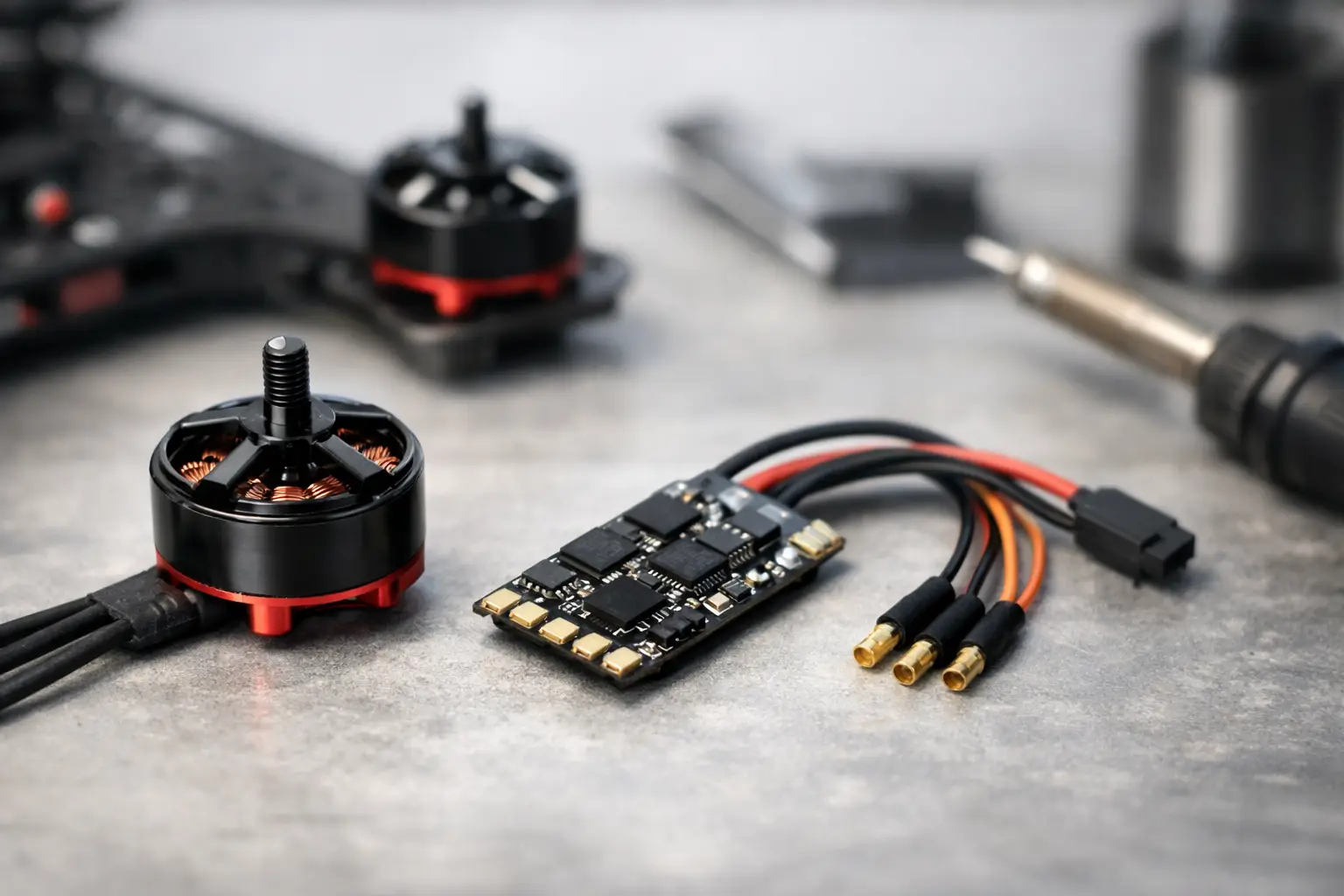
How to Match ESC and Motor Properly - Avoid Overheating, Cogging and Burnt Electronics
Burnt wires, cogging off the line, ESCs too hot to touch and motors that feel aggressive for two minutes before cutting out usually come from one thing:
a mismatched setup.
If you are learning how to match ESC and motor combinations properly, the goal is not simply making the RC vehicle move. The goal is building a setup that:
-
runs reliably
-
stays cool
-
suits the chassis
-
handles the terrain properly
-
matches the way you actually drive
That matters whether you run:
-
bashers
-
crawlers
-
on-road RC cars
-
monster trucks
-
aircraft
-
construction vehicles
RC Model Shop stocks a large range of:
suitable for crawlers, bashers and performance RC setups.
Start with the whole system, not just one part
This is where many RC upgrades go wrong.
A motor can physically fit the chassis and still be completely wrong for:
-
the ESC
-
the battery
-
the gearing
-
the vehicle weight
Likewise:
-
an ESC may technically support the voltage
while still struggling badly with: -
heat
-
current spikes
-
heavy tyres
-
aggressive gearing
That is why matching ESC and motor combinations properly means checking:
-
Motor type
-
Voltage compatibility
-
ESC current rating
-
Motor KV or turns
-
Vehicle size and weight
-
Intended driving style
When one of those gets ignored, the setup often:
-
overheats
-
feels weak
-
cuts out
-
wears prematurely
even if the RC car technically “works.”
Brushed vs brushless comes first
This sounds obvious, but it still catches people out constantly.
Brushed motors
Brushed motors require:
brushed ESCs.
They are generally:
-
simpler
-
cheaper
-
easier for beginners
-
more forgiving
Lower-turn brushed motors draw more current and therefore require stronger ESC support.
Example:
-
ESC rated to 15T minimum
-
installing 12T motor
usually means:
-
overheating
-
ESC stress
-
shortened lifespan
Brushless motors
Brushless motors require:
brushless ESCs.
They provide:
-
more power
-
stronger efficiency
-
less maintenance
-
higher performance potential
However:
-
sensorless
and -
sensored
brushless systems behave differently.
Sensored vs sensorless brushless systems
Sensorless systems
Sensorless brushless setups are common in:
-
bashers
-
monster trucks
-
general off-road RC
They provide:
-
strong speed
-
simple installation
-
good durability
However, very low-speed throttle response can sometimes feel:
-
rough
-
jerky
-
less precise
Sensored systems
Sensored setups improve:
-
low-speed smoothness
-
throttle precision
-
crawler control
-
startup response
That matters heavily in:
-
crawlers
-
rock racers
-
technical trail trucks
A sensored setup often feels dramatically smoother during:
-
climbing
-
slow manoeuvring
-
obstacle control
Voltage compatibility must match fully
Both the:
-
ESC
and -
motor
must support the intended battery voltage.
Example:
-
ESC supports 2S–3S
-
motor supports 2S–3S
That setup is fine.
However:
-
ESC supports 3S
-
motor limited to 2S
means:
the entire system is effectively limited to 2S.
Voltage changes RC behaviour quickly.
A setup that feels mild on:
2S
can become extremely aggressive on:
3S
especially with:
-
tall gearing
-
heavy wheels
-
larger tyres
This is why copying another hobbyist’s setup does not always work if:
-
vehicle weight differs
-
tyres differ
-
gearing differs
-
terrain differs
ESC current rating matters more than people think
This is where many mismatches happen.
ESCs are usually rated with:
-
continuous current
-
burst current
The continuous rating is the important one.
Burst ratings only cover:
-
short spikes
-
temporary acceleration loads
They are NOT designed for:
-
constant full-throttle abuse
-
heavy gearing
-
oversized tyres
A sensible ESC setup should always leave:
headroom.
Example:
-
expected draw around 70A
-
using 100A ESC
usually works far better long-term than:
-
squeezing everything into an 80A ESC running constantly near limit.
More headroom normally means:
-
lower temperatures
-
reduced stress
-
greater reliability
This matters massively in:
-
4WD bashers
-
1/8 RC vehicles
-
heavy crawlers
-
larger monster trucks
Understanding KV and turns properly
Brushless KV
Higher KV means:
higher RPM per volt.
However:
higher KV is not automatically better.
A high-KV motor in:
-
a lightweight on-road car
can work extremely well.
That same setup in:
-
a crawler
-
heavy monster truck
may:
-
overheat
-
cog badly
-
drain batteries rapidly
Lower KV usually provides:
-
more control
-
cooler running
-
stronger torque delivery
especially under load.
Brushed turns
Lower-turn brushed motors generally:
-
spin faster
-
pull more current
-
generate more heat
This is why ESC compatibility limits matter heavily on brushed systems too.
Vehicle weight changes everything
Heavy RC vehicles demand more from:
-
motors
-
ESCs
-
batteries
A setup that runs cool in:
-
a lightweight buggy
may struggle badly in:
-
a heavy monster truck
even with identical electronics.
Weight affects:
-
acceleration load
-
current spikes
-
motor temperatures
-
drivetrain stress
That is why RC setup advice always needs context.
Gearing can completely change ESC temperatures
This is one of the biggest overlooked setup areas.
A system running cool with:
-
conservative gearing
may overheat badly with:
-
taller pinions
-
oversized tyres
-
aggressive gearing
When installing a new setup:
start conservatively.
Run:
-
shorter sessions
-
temperature checks
-
gradual gearing increases
Warm electronics are normal.
Electronics too hot to touch comfortably for more than:
-
a second or two
usually indicate:
-
excessive load
-
gearing too aggressive
-
airflow issues
-
drivetrain drag
RC Model Shop stocks a large range of RC pinions and gearing upgrades suitable for brushless and brushed RC setups.
ESC cooling matters too
Even a strong ESC can struggle if:
-
airflow is poor
-
chassis space is tight
-
cooling fans are blocked
This matters especially in:
-
waterproof chassis
-
compact radio trays
-
enclosed RC bodies
A waterproof ESC squeezed into a tiny airflow-free chassis may run far hotter than expected even when technically within specification.
Battery quality affects the ESC too
The battery is part of the system.
A weak battery can make a strong setup feel:
-
flat
-
inconsistent
-
sluggish
A very powerful high-discharge battery can also expose:
-
weak ESCs
-
poor soldering
-
undersized connectors
very quickly.
That is why battery quality and connector quality matter heavily once power increases.
You can browse a large range of RC batteries and LiPo packs suitable for brushed and brushless RC systems.
ESC and motor combos simplify compatibility
For many hobbyists:
combo systems make life easier.
Pre-matched ESC and motor combinations usually reduce:
-
compatibility mistakes
-
gearing guesswork
-
current mismatch problems
They also simplify:
-
installation
-
setup
-
tuning
especially for:
-
beginners
-
first brushless conversions
-
RTR upgrades
You can browse compatible ESC and motor combo systems here.
Matching setups for different RC uses
Bashers
Bashers benefit most from:
-
current headroom
-
cooling
-
reliability
A slightly oversized ESC is usually a smart investment for:
-
rough terrain
-
repeated acceleration
-
hot weather
-
aggressive driving
Crawlers
Crawlers prioritise:
-
smooth throttle
-
low-speed precision
-
predictable torque
Lower KV and sensored setups often make more sense here than chasing speed.
On-road and drift setups
On-road RC systems usually care more about:
-
weight
-
punch
-
RPM
-
acceleration feel
However:
temperature still matters.
A setup that feels fast but overheats constantly is still badly matched.
Aircraft setups
Aircraft introduce:
-
propeller size
-
airflow
-
sustained current draw
as additional variables.
A motor and ESC may both support:
4S
but:
-
an oversized propeller
can overload the ESC extremely quickly.
Common ESC and motor matching mistakes
The biggest mistakes are:
-
buying to the exact limit
-
ignoring gearing
-
overlooking battery quality
-
focusing only on KV
-
upgrading only one component
A huge motor on:
-
a weak ESC
or -
poor battery
rarely works well.
Likewise:
-
a massive ESC
paired with: -
an unsuitable motor
does not automatically create a balanced setup.
A smarter way to match ESC and motor setups
The best RC electronics setups are usually:
-
balanced
-
cool-running
-
reliable
-
predictable
rather than simply producing the highest speed figures possible.
Before buying:
-
Check voltage compatibility
-
Check realistic current demand
-
Consider vehicle weight
-
Start with conservative gearing
-
Leave ESC headroom
That process prevents most expensive mistakes.
At RC Model Shop, the focus is always helping RC hobbyists match electronics properly to:
-
the chassis
-
the drivetrain
-
the battery setup
-
the intended use
rather than simply recommending the most aggressive specifications available.
A properly matched ESC and motor setup should:
-
stay cool
-
deliver smooth power
-
survive repeated runs
-
remain dependable pack after pack
without constant troubleshooting.
Frequently Asked Questions
Can any ESC run any motor?
No. ESCs must match:
-
brushed or brushless motor type
-
voltage support
-
current demand
-
intended application
properly.
What happens if the ESC is too small?
An undersized ESC may:
-
overheat
-
cut out
-
burn wiring
-
fail prematurely
especially under heavy load.
Is higher KV always better?
No. Higher KV increases RPM but can also increase:
-
heat
-
current draw
-
drivetrain stress
if the setup is unsuitable.
Should I leave headroom on ESC amp rating?
Yes. Leaving current headroom usually improves:
-
reliability
-
temperatures
-
long-term durability
especially on powerful RC setups.
Are ESC and motor combos worth buying?
For many hobbyists, yes. Combo systems reduce compatibility mistakes and simplify setup considerably.
Written by the RC team at RCModelShop.co.uk / Appliance Electronics UK Ltd, UK supplier of RC ESCs, motors, combo systems and RC electronics.