Best Servo for RC Crawler Buying Guide
25/04/2026
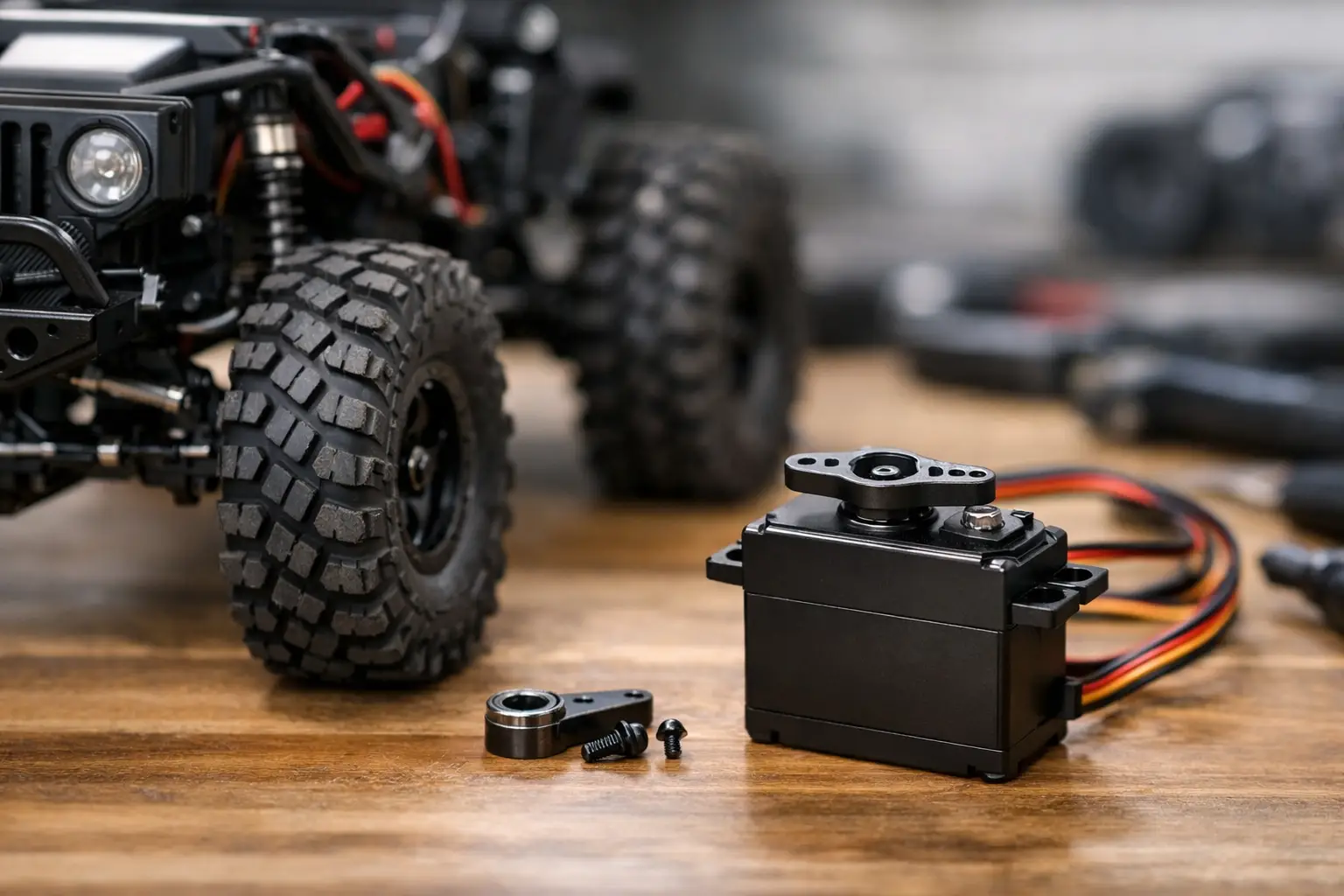
Best Servo for RC Crawler Builds - Choosing the Right Steering Servo Without the Guesswork
A crawler with weak steering never feels properly settled on the rocks.
You can have:
-
the tyres
-
the links
-
the gearing
-
the suspension
all working well, but if the front wheels struggle to hold a line under load, the servo is usually where the problem starts.
That is why choosing the best servo for RC crawler use is about far more than simply chasing the biggest torque number on the box.
The right crawler servo should provide:
-
reliable steering power
-
clean centring
-
sensible waterproofing
-
smooth low-speed control
-
compatibility with the electronics setup
That matters whether you run:
-
a lightweight trail truck
-
a brass-loaded crawler
-
a scale lorry
-
a competition-focused rock crawler
RC Model Shop stocks a large range of RC servos and crawler steering electronics suitable for trail trucks, crawlers and heavy off-road RC builds.
What actually makes a good crawler servo?
Torque is usually the first thing buyers look at, and for good reason.
Crawler servos work much harder than many standard RC steering setups because the wheels are often:
-
wedged against rocks
-
loaded on climbs
-
pushing against obstacles
-
fighting heavy tyres
The heavier the crawler becomes, the more steering demand increases.
This matters especially once owners add:
-
brass portal weights
-
brass hubs
-
beadlock wheels
-
sticky crawler tyres
-
larger wheel setups
However:
torque alone does not make a great crawler servo.
The best crawler servos balance:
-
torque
-
speed
-
centring
-
durability
-
power efficiency
rather than simply advertising huge numbers.
Servo speed matters more than people expect
Many buyers focus entirely on torque and forget steering response completely.
A very strong but slow servo can make a crawler feel:
-
dull
-
delayed
-
inconsistent on technical lines
Good steering response helps place the front wheels accurately when:
-
climbing
-
side-hilling
-
correcting direction
-
navigating technical terrain
That does not mean crawler servos need touring-car speed.
It simply means:
usable response matters.
The best crawler servos usually combine:
-
strong low-speed control
-
decent steering speed
-
reliable centring
without feeling lazy under load.
Metal gears vs plastic gears
For most crawler setups:
metal gears are the safer choice.
Crawlers place heavy strain on steering systems, especially with:
-
large tyres
-
brass upgrades
-
rough terrain
Metal gears generally offer:
-
improved durability
-
better long-term wear resistance
-
stronger steering load handling
Plastic gears still work on:
-
lighter trail trucks
-
budget builds
-
casual setups
but most serious crawler owners eventually move toward metal gear servos for reliability reasons alone.
Waterproof servos matter for UK conditions
UK crawler terrain is rarely dry for long.
Mud, puddles, damp woodland trails and wet grass regularly expose steering electronics to moisture.
For crawler use, waterproofing or strong water resistance is usually worth prioritising.
That does not mean:
“submarine-proof.”
It simply means the servo is more likely to survive realistic crawler conditions without:
-
corrosion
-
intermittent faults
-
moisture damage
long-term.
How much servo torque do RC crawlers actually need?
This is where many buyers either:
-
overspend heavily
or -
buy something far too weak.
Light trail trucks
Lighter trail-focused rigs can often run perfectly well on:
-
moderate torque
-
sensible voltage
-
balanced steering geometry
without requiring massive steering power.
Typical 1/10 crawlers
Once you move into:
-
heavier 1/10 crawlers
-
larger tyres
-
added front-end weight
higher-torque servos become much more useful.
This is where steering authority under load becomes noticeable.
Heavy upgraded crawlers
Heavy brass-loaded crawlers with:
-
oversized tyres
-
portal axles
-
weighted wheels
-
competition setups
usually justify stepping up further.
At that point, steering consistency matters more than simply:
“can the wheels move eventually?”
Good crawlers need:
-
immediate response
-
strong holding power
-
reliable centring
under load.
Digital vs analogue crawler servos
For most crawler upgrades:
digital servos are the stronger option.
Digital servos generally provide:
-
better holding power
-
cleaner centring
-
stronger response
-
more precise control
which suits crawling extremely well.
Analogue servos still work for:
-
budget trail trucks
-
casual running
-
lighter RC vehicles
but if you are upgrading from a stock RTR servo and want a noticeable improvement, digital is usually the clearest step forward.
Voltage and BEC compatibility matter heavily
This is one of the most overlooked crawler upgrade mistakes.
A powerful servo still needs enough power from:
-
the ESC
-
the BEC
-
the receiver system
before it can perform properly.
High-torque servos often draw significantly more current under load.
If the ESC’s built-in BEC is weak, you may experience:
-
brownouts
-
steering glitches
-
inconsistent centring
-
poor steering strength
even with an expensive servo installed.
This is why:
the strongest servo is not automatically the best servo.
The steering system needs to work as a complete package.
Many heavy crawlers benefit from:
-
stronger BEC support
-
cleaner wiring
-
sensible voltage setup
rather than simply installing maximum-torque servos blindly.
Servo size and mounting compatibility
Not every crawler servo physically fits every chassis properly.
Before buying, check:
-
mounting dimensions
-
tray clearance
-
case height
-
horn position
-
panhard clearance
This becomes especially important once:
-
larger servos
-
alloy mounts
-
chassis braces
are involved.
Servo spline count matters too.
If you plan to reuse an old servo horn, the spline count must match the new servo correctly.
In many cases, upgrading to a fresh aluminium servo horn makes more sense anyway once steering power increases.
You can browse a large range of RC accessories, steering upgrades and crawler components suitable for many crawler platforms.
Why steering link condition matters too
Even a very strong servo feels weak if:
-
steering links bind
-
rod ends wear
-
geometry is poor
-
bearings seize
Before replacing the servo, inspect:
-
steering links
-
rod ends
-
servo saver tension
-
bearings
-
axle movement
A properly maintained steering system often improves performance dramatically before electronics are even upgraded.
Premium servo vs budget servo
There is no universal answer because:
-
driving style
-
crawler weight
-
terrain
-
expectations
all matter.
Budget crawler servos
Budget upgrades can still provide:
-
noticeable steering improvement
-
better reliability
-
improved durability
over weak RTR servos.
For casual trail trucks, sensible mid-range performance often gives the best overall value.
Premium crawler servos
Premium servos become easier to justify once:
-
crawler weight increases
-
terrain becomes more technical
-
steering precision matters more
This is where:
-
stronger cases
-
cleaner centring
-
better waterproofing
-
improved load handling
become noticeable in real-world use.
The difference usually shows itself:
on the rocks, not on the bench.
Common signs your crawler servo is undersized
The servo does not need to fail completely to be the wrong choice.
Warning signs include:
-
wheels only turning while moving
-
steering locking under load
-
inconsistent centring
-
excessive buzzing
-
servo overheating
-
weak steering on climbs
These symptoms may point toward:
-
insufficient torque
-
weak BEC output
-
steering binding
-
damaged steering components
rather than total servo failure.
A smarter way to choose a crawler servo
The best crawler servo is usually the one that:
-
matches the crawler weight
-
suits the electronics setup
-
delivers predictable steering
-
survives realistic terrain
rather than simply producing the highest printed torque figure.
Before buying, check:
-
Vehicle weight
-
Tyre size
-
ESC/BEC capability
-
Mounting size
-
Spline compatibility
That simple process avoids most crawler steering upgrade mistakes.
At RC Model Shop, the goal is always helping crawler owners match servos properly to:
-
the chassis
-
the steering load
-
the terrain
-
the intended use
rather than simply recommending the strongest unit available.
A properly matched crawler servo makes the RC vehicle feel:
-
more predictable
-
easier to place
-
more controlled
-
more confidence-inspiring
every time the tyres hit the rocks.
Frequently Asked Questions
What is the best servo for a 1/10 RC crawler?
For many 1/10 crawlers, a waterproof digital metal gear servo with strong torque and reliable centring is the safest overall choice.
Are digital servos better for crawlers?
Yes. Digital servos generally provide:
-
stronger holding power
-
better centring
-
improved steering precision
which suits crawling very well.
Why does my crawler steering feel weak?
Common causes include:
-
undersized servo
-
weak BEC output
-
steering binding
-
worn steering links
-
oversized tyres
Do crawler servos need waterproofing?
For UK crawler conditions, waterproofing or water resistance is strongly recommended because of mud, puddles and wet terrain.
Why does my servo buzz under load?
Buzzing may indicate:
-
steering strain
-
insufficient torque
-
binding steering
-
weak power delivery
-
servo overload
Written by the RC team at RCModelShop.co.uk / Appliance Electronics UK Ltd, UK supplier of crawler servos, RC electronics, batteries and RC upgrade parts.