Best RC Chargers UK Buyers Should Consider
28/06/2026
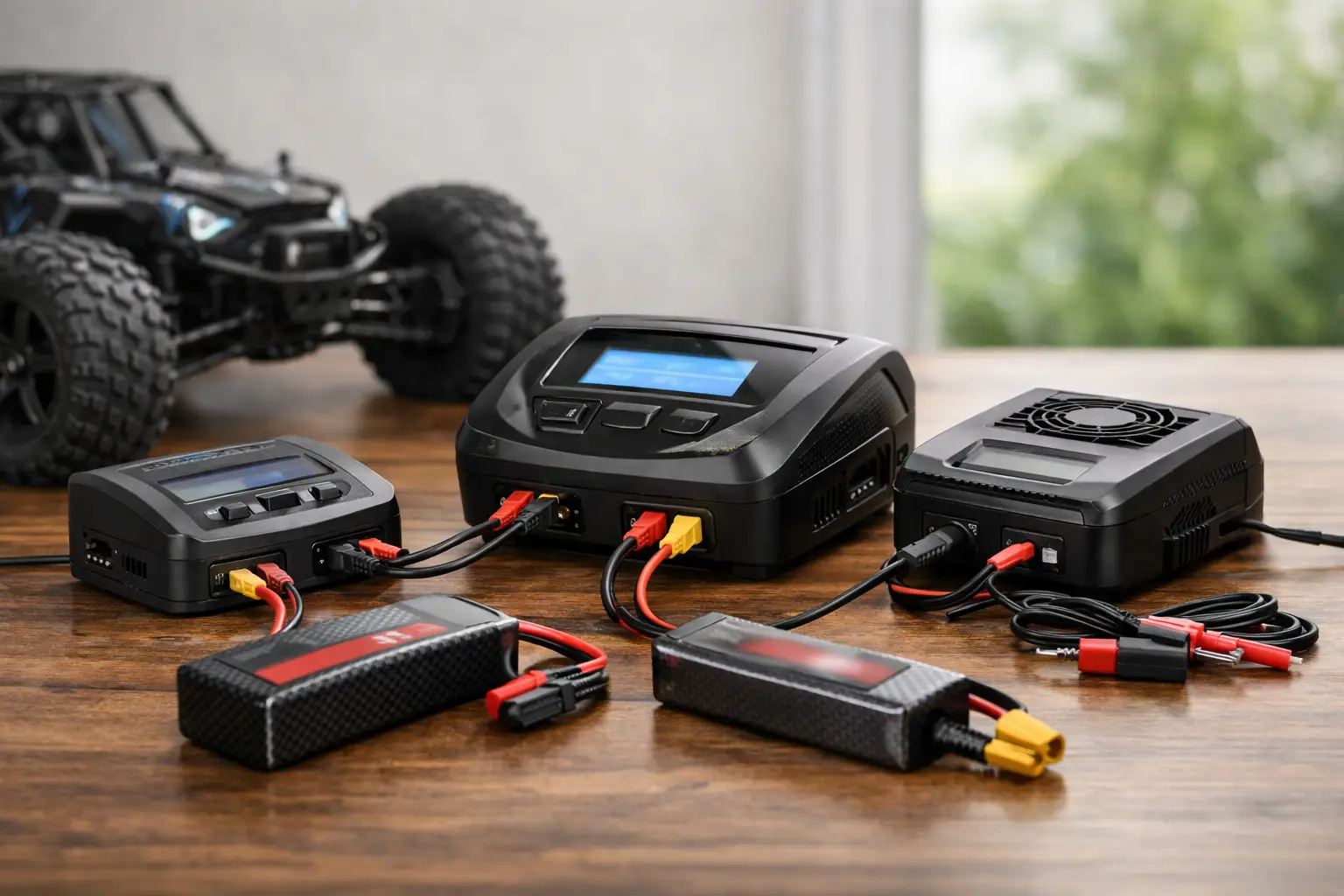
Best RC Chargers UK – How to Choose the Right Battery Charger for Your RC Hobby
A reliable charger is one of the best investments you can make in the RC hobby. While it's easy to focus on choosing the perfect RC car, plane or boat, the charger you use has a direct impact on your batteries, charging times and overall enjoyment. A poor-quality charger can leave you waiting for hours, while the right charger keeps your batteries healthy and gets you back out driving or flying much sooner.
If you're searching for the best RC chargers in the UK, the ideal choice depends on the batteries you use, the number of packs you charge and how you enjoy the hobby. Whether you're just getting started or you're running multiple high-capacity LiPo batteries every weekend, choosing the right charger now will save you time and money in the long run.
Browse our full range of RC Battery Chargers:
https://www.applianceelectronics.co.uk/products/447/battery-chargers
You may also find these guides helpful:
-
RC Batteries & Chargers:
https://www.applianceelectronics.co.uk/products/514/batteries-chargers -
RC Parts & Accessories:
https://www.applianceelectronics.co.uk/products/386/accessories-parts
Why Your RC Charger Matters
Many newcomers underestimate how important a good charger really is.
A quality charger doesn't simply refill your batteries. It balances individual cells, helps maximise battery life, reduces charging times and provides important safety features that protect both your batteries and your investment.
Whether you own a single crawler or several powerful bashers, choosing the correct charger makes every session easier.
Choosing the Right Charger for Your Batteries
Before buying a charger, check which battery types you currently own and whether you're likely to upgrade in the future.
Most modern RC models use LiPo batteries, but many entry-level vehicles, transmitters and older models still use NiMH batteries. Some hobbyists also use LiFe or LiHV packs.
A good charger should ideally support:
-
LiPo batteries
-
LiHV batteries
-
LiFe batteries
-
NiMH batteries
-
NiCd batteries
Buying a charger that supports several battery chemistries means it will continue to serve you even if your collection changes.
Understanding Charger Power
One specification many buyers overlook is output power.
A charger may look impressive with a large display and plenty of charging modes, but if it doesn't have enough wattage, larger batteries will still take a long time to charge.
For occasional use with 2S or 3S batteries, a modest charger is usually more than adequate.
However, once you move into larger 4S or 6S LiPo batteries, charger power becomes far more important.
Higher-powered chargers allow you to charge larger packs properly without constantly operating at their maximum limit.
Single Output vs Dual Output Chargers
This is one of the biggest decisions when choosing an RC charger.
Single Output Chargers
A single-output charger is ideal if you:
-
Only own one or two batteries
-
Mostly drive at weekends
-
Charge batteries at home
-
Want a simple, compact charger
These chargers are usually more affordable and easier for beginners to understand.
Dual Output Chargers
Dual-output chargers are ideal if you:
-
Own several battery packs
-
Regularly run multiple vehicles
-
Race competitively
-
Want to charge two batteries simultaneously
Always check whether each charging channel has its own full power output, as some chargers share their available wattage across both ports.
AC or DC Charger?
AC Chargers
AC chargers include a built-in power supply.
Simply plug them into a household wall socket and you're ready to charge.
They're perfect for:
-
Home workshops
-
Beginners
-
Casual RC users
-
Simple plug-and-play charging
DC Chargers
DC chargers require an external power supply or 12V battery.
Although slightly less convenient, they often provide significantly higher charging performance for the money and are popular with experienced hobbyists and racers.
Balance Charging Explained
Balance charging is essential for LiPo batteries.
Rather than charging the battery as a single pack, balance charging monitors every individual cell and ensures they all reach exactly the same voltage.
Benefits include:
-
Longer battery life
-
Improved performance
-
Better safety
-
More consistent power
If you're buying a LiPo charger, balance charging should be considered a must-have feature.
Don't Forget Storage Charging
One feature many new hobbyists overlook is Storage Mode.
LiPo batteries should never be left fully charged for long periods.
If you won't be using your batteries for several days or weeks, a storage charge brings each cell to the ideal voltage for long-term storage.
This helps preserve battery health and extends overall lifespan.
Smart Chargers vs Traditional Chargers
Smart charging systems continue to grow in popularity.
When paired with compatible batteries, they automatically detect battery information and configure charging settings for you.
This removes much of the guesswork for beginners.
Traditional chargers remain an excellent choice because they support a wider variety of battery brands, connectors and charging options.
If you own batteries from different manufacturers, a traditional charger often offers greater long-term flexibility.
Choosing the Right Charger for Your RC Hobby
Different RC hobbies place different demands on a charger.
RC Cars & Monster Trucks
If you're running powerful bashers or monster trucks, faster charging and dual outputs become increasingly useful.
RC Crawlers
Crawler owners generally benefit from reliable balance charging rather than maximum charging speed.
RC Boats
Boat batteries are often larger and benefit greatly from higher-powered chargers.
RC Aircraft
Aircraft pilots frequently own several battery packs for a day's flying, making faster charging and higher wattage especially valuable.
Common Buying Mistakes
Avoid these common mistakes when choosing your next charger:
-
Buying purely on price
-
Ignoring charger wattage
-
Forgetting connector compatibility
-
Not checking battery chemistry support
-
Choosing a charger with no room for future upgrades
A slightly better charger today can often save replacing it a year later.
RC Charger Safety Tips
Always follow safe charging practices:
-
Always balance charge LiPo batteries.
-
Never leave batteries charging unattended.
-
Charge batteries on a fire-resistant surface.
-
Inspect damaged batteries before charging.
-
Use Storage Mode if batteries won't be used for several days.
-
Allow batteries to cool before recharging.
Good charging habits are just as important as choosing the right charger.
Choosing with Confidence
The best RC charger is the one that suits your batteries today while leaving enough capacity for tomorrow.
Think about:
-
How many batteries you charge each week
-
Which battery types you own
-
Whether you need one or two charging outputs
-
If you mainly charge at home or away
-
Your future plans within the hobby
A quality charger will quickly become one of the most useful tools on your workbench, helping you spend less time waiting and more time enjoying your RC models.
If you're unsure which charger is right for your setup, our team is always happy to help you choose the best option.
Browse our complete range of RC Battery Chargers:
https://www.applianceelectronics.co.uk/products/447/battery-chargers
Frequently Asked Questions
What is the best RC charger for beginners?
A charger with balance charging, storage mode and support for both LiPo and NiMH batteries is an excellent starting point. It offers flexibility as your collection grows.
Do I need a balance charger for LiPo batteries?
Yes. Balance charging helps keep every cell at the correct voltage, improving battery life, performance and safety.
Should I buy an AC or DC RC charger?
AC chargers are ideal for home use because they plug directly into the mains. DC chargers generally offer more power for the money but require an external power supply.
Is a dual-output charger worth buying?
If you regularly charge multiple batteries or own several RC models, a dual-output charger can save a significant amount of time.
Can one charger charge different battery types?
Many modern chargers support LiPo, LiHV, LiFe, NiMH and NiCd batteries. Always check the specifications before buying.
Related Products
-
RC Battery Chargers
https://www.applianceelectronics.co.uk/products/447/battery-chargers -
RC Batteries & Chargers
https://www.applianceelectronics.co.uk/products/514/batteries-chargers -
RC Parts & Accessories
https://www.applianceelectronics.co.uk/products/386/accessories-parts
Related Articles
-
Best RC Batteries UK – Choosing the Right Battery for Your Model
-
LiPo Battery Safety Guide
-
How to Store RC Batteries Properly
-
How Long Do RC LiPo Batteries Last?
-
Common RC Battery Problems Explained
Written by the RC Model Shop Team – Passionate RC enthusiasts bringing expert advice, buying guides and hobby tips to help you get the most from your RC cars, trucks, boats and aircraft.