

Are RC Car Parts Universal? What Every RC Owner Needs to Know Before Buying Spares
16/06/2026
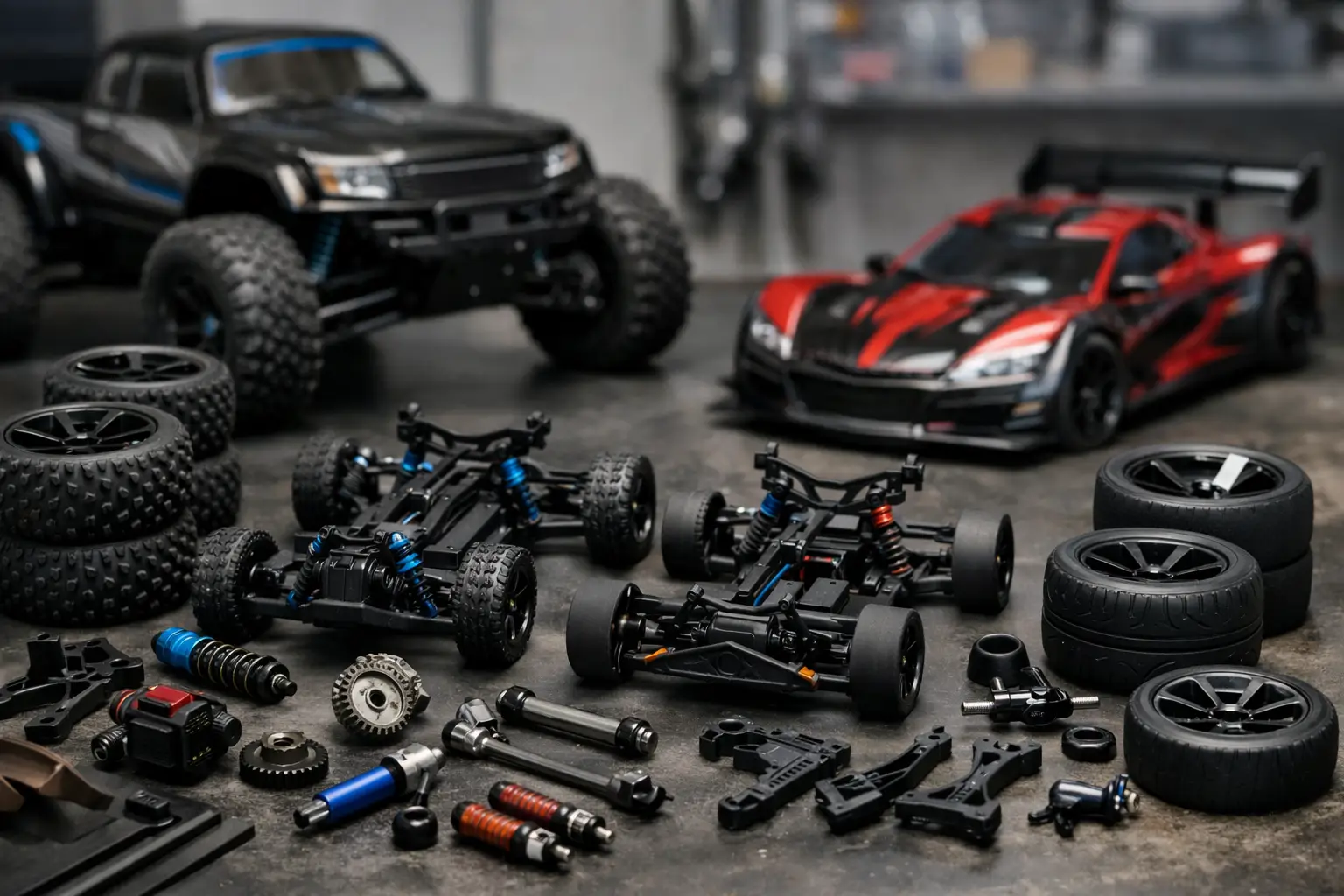
One of the most common questions we hear is: "Are RC car parts universal?"
It only takes ordering the wrong suspension arm, driveshaft or pinion gear once to realise that RC parts compatibility is not always straightforward. While some components can be shared across different vehicles, many parts are designed specifically for certain models, brands or platforms.
Understanding which parts can be mixed and matched and which require exact fitment can save time, money and frustration.
Shop RC Parts & Upgrades
Looking for replacement parts or upgrades for your RC vehicle?
-
RC Parts & Accessories: https://www.applianceelectronics.co.uk/products/386/accessories-parts
-
Vitavon Performance Upgrades: https://www.applianceelectronics.co.uk/products/470/vitavon-upgrades
Are RC Car Parts Universal Across All Models?
In most cases, no.
RC car parts are rarely universal across all brands and models. Compatibility depends on factors such as:
-
Vehicle manufacturer
-
Model platform
-
Scale size
-
Wheelbase
-
Drivetrain layout
-
Production version
For example, a part designed for a 1/10 buggy may not fit a 1/10 short course truck, even though both vehicles share the same scale.
Many RC enthusiasts get caught out because parts often look similar online. A suspension arm, gearbox casing or steering component may appear identical in photos but differ slightly in dimensions, mounting points or geometry.
Even a few millimetres can make the difference between a perfect fit and a completely unusable part.
Which RC Parts Are Closest to Universal?
Some categories offer far greater compatibility than others.
Electronics
Electronics are often the easiest components to interchange.
Common examples include:
-
Steering servos
-
Brushless motors
-
Electronic Speed Controllers (ESCs)
-
Receivers
-
Connectors and adapters
However, you still need to verify:
-
Physical dimensions
-
Voltage requirements
-
Connector types
-
Current ratings
-
Waterproofing requirements
A motor may physically fit but require completely different gearing to perform correctly.
Wheels and Tyres
Many wheels and tyres can be shared across different models if key specifications match:
-
Hex size
-
Wheel diameter
-
Wheel width
-
Offset
-
Tyre height
A common example is the 12mm hex used on many 1/10 vehicles. Even then, offset differences can cause steering interference or unwanted changes in handling.
Batteries
Battery packs often work across multiple vehicles if:
-
Voltage is suitable
-
Connector type matches
-
Physical dimensions fit the battery tray
Many 2S and 3S LiPo batteries are used in multiple vehicles, but height and length restrictions frequently cause compatibility issues.
Bodies and Shells
RC bodies are often considered semi-universal.
A shell may fit if:
-
Wheelbase is correct
-
Overall width is suitable
-
Body posts align correctly
However, bumper clearance, tyre coverage and mounting locations can still prevent a perfect fit.
Which RC Parts Are Usually Model Specific?
Structural components are where compatibility becomes much more limited.
Suspension Components
These typically require exact fitment:
-
Suspension arms
-
Steering knuckles
-
Hubs
-
C-hubs
-
Shock towers
-
Linkages
Small differences in geometry can dramatically affect handling.
Transmission Components
Transmission parts are particularly vehicle-specific.
Examples include:
-
Spur gears
-
Pinion gears
-
Differentials
-
Driveshafts
-
Outdrives
-
Centre shafts
Even when parts appear identical, differences in tooth pitch, shaft diameter or mounting dimensions can make them incompatible.
Chassis Components
Items such as:
-
Chassis rails
-
Top decks
-
Gearbox housings
-
Bumpers
-
Braces
are normally designed for one specific platform or vehicle family.
Why Doesn't One Brand's Part Fit Another?
Manufacturers design vehicles around their own specifications.
Even vehicles that appear similar may use different:
-
Suspension geometry
-
Ride heights
-
Gear ratios
-
Mounting systems
-
Drivetrain layouts
This is why an ARRMA component rarely serves as a direct replacement for a Traxxas, FTX, Losi or Team Associated equivalent.
There are occasional exceptions, especially with aftermarket upgrades, but cross-brand compatibility is still relatively uncommon.
How to Check RC Part Compatibility
The safest approach is always to start with the exact vehicle model.
Before purchasing, check:
For Electronics
-
Dimensions
-
Voltage ratings
-
Connector type
-
Mounting arrangement
For Wheels
-
Hex size
-
Offset
-
Diameter
-
Width
For Gears
-
Tooth pitch
-
Tooth count
-
Bore size
-
Shaft diameter
For Suspension Components
-
Length
-
Mounting points
-
Hole spacing
-
Left/right orientation
Manufacturer exploded diagrams are also extremely useful for confirming exact fitment before ordering.
Universal Upgrades vs Direct Replacement Parts
There is an important difference between replacing a broken component and fitting an upgrade.
A replacement part generally needs to match exactly.
An upgrade may provide:
-
Increased strength
-
Improved precision
-
Better durability
-
Enhanced performance
However, upgrades still need to be compatible with the vehicle.
For example:
-
A steering servo may physically fit but exceed your ESC's BEC capabilities.
-
Alloy beadlock wheels may fit perfectly but increase drivetrain stress.
-
Larger tyres may require gearing changes.
Successful upgrades involve more than simply making a part fit.
Common Mistakes When Buying RC Parts
Many compatibility problems come from a few common errors.
Buying by Appearance
Parts that look identical online often differ in critical dimensions.
Assuming Scale Equals Compatibility
Not every 1/10 component fits every 1/10 vehicle.
Scale is only one piece of the compatibility puzzle.
Ignoring Model Revisions
Manufacturers frequently release:
-
V2 models
-
HD versions
-
Updated drivetrains
-
Revised suspension components
A familiar model name does not guarantee identical parts.
Assuming Aftermarket Means Universal
Aftermarket parts provide more choices, but not necessarily broader compatibility.
Always verify fitment before ordering.
Build Smart, Upgrade Smart
RC vehicles offer endless opportunities for maintenance, repair and upgrades, but compatibility matters. While some electronics, wheels, batteries and bodies can often be shared between models, many structural and drivetrain components require exact fitment.
Experienced hobbyists rarely assume a part will fit simply because it looks right. They check specifications, compare part numbers and verify compatibility before spending money.
If you're ever unsure, ask before ordering. A quick compatibility check can save far more time and expense than ordering the wrong part and discovering it only when the vehicle is sitting in pieces on the workbench.
Frequently Asked Questions
Are RC car parts interchangeable?
Some are, particularly electronics, batteries and certain wheels, but many suspension, drivetrain and chassis components are vehicle-specific.
Can I use ARRMA parts on a Traxxas?
Generally no. Most structural and drivetrain components are designed specifically for their own platforms.
Are RC servos universal?
Many standard-size servos fit multiple vehicles, but dimensions, spline types and power requirements still need checking.
Do all 1/10 RC cars use the same wheels?
No. Hex size, offset, width and diameter all affect compatibility.
How do I find the correct RC spare part?
The best method is to search using the exact model name and manufacturer part number, then verify fitment using exploded diagrams or retailer advice.
Written by the RC team at RC Model Shop / Appliance Electronics UK Ltd. For RC cars, crawlers, aircraft, boats, batteries, chargers, spares and upgrades, visit RCModelShop.co.uk or call 01922 494608.